
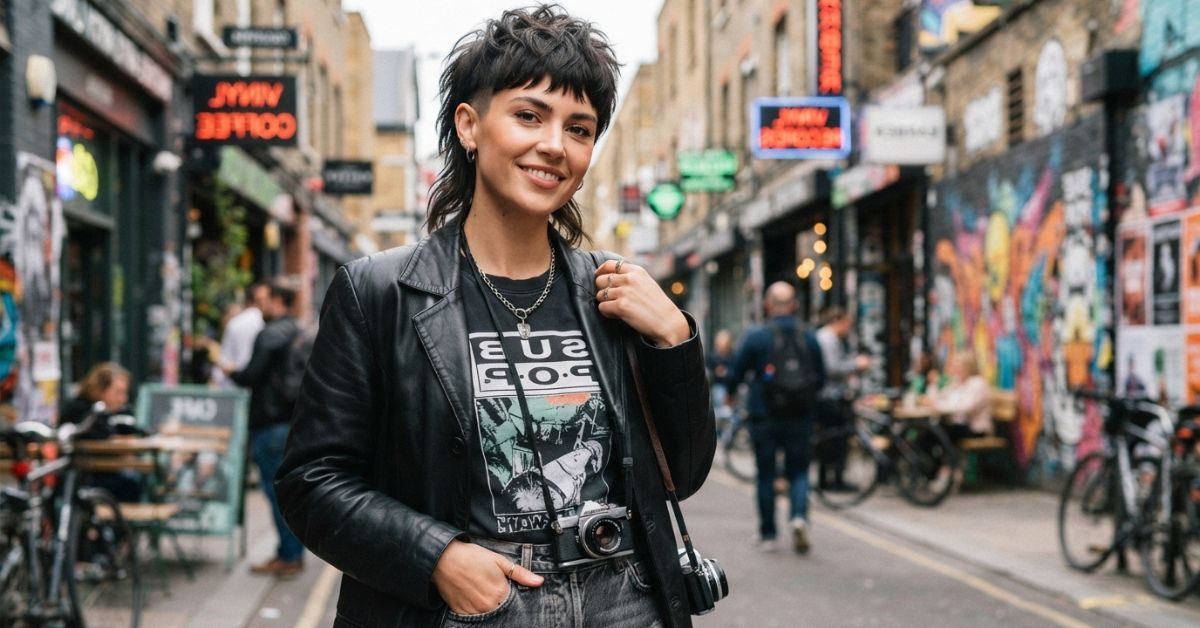
The mullet has fully shed its 1980s reputation. In 2026, it’s one of the most requested cuts in barbershops, but the version people actually ask for isn’t the dramatic, party in the back throwback most people picture. Today’s mullet is shorter, tighter, and far easier to wear to work, the gym, or a first date.
A short mullet keeps the sides and top at a manageable length while still leaving enough hair at the nape to create that signature silhouette. It’s less commitment, less upkeep, and more flattering across face shapes and hair textures than the exaggerated versions of the past.
This guide breaks down 12 short mullet variations trending in 2026, how to style them, which fade pairs best with each, and how to keep the cut looking sharp between barber visits.
Short Modern Mullet

The short modern mullet is the baseline version everyone else on this list builds from. It combines a cropped top and sides with just enough length left at the back to read as a mullet rather than a standard fade.
Unlike the exaggerated mullets of decades past, this cut relies on subtlety. The length difference between the crown and the nape is often just an inch or two, which makes it office friendly while still carrying the mullet’s rebellious edge.
Who it suits:
- Straight to slightly wavy hair
- Oval, square, and heart face shapes
- First timers who want to test the trend without a drastic change
Ask your barber for a taper or low fade on the sides, a textured crop on top, and a nape left roughly 1.5 to 2 inches long.
Short Burst Fade Mullet
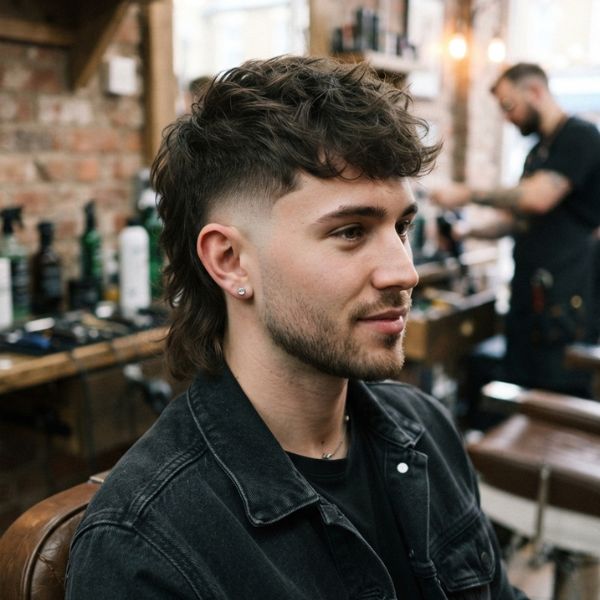
The burst fade mullet curves the fade around the ear in a semicircle instead of running it in a straight line down the neck. That circular blend adds contrast and energy while keeping the back length fully intact.
This variation gives more visual punch than a standard taper without going all the way to a skin fade. Because the fade is concentrated around the ear rather than spread across the whole side, it also grows out more evenly, so you won’t see an obvious hard line reappearing after a couple of weeks.
Best for: thick or medium density hair and rounder face shapes, since the fade narrows the sides visually.
Short Taper Mullet

The taper mullet is the safest and most versatile option in this entire style family. The sides gradually shorten toward the skin without ever fully disappearing, creating a soft, gradual transition into the longer back section.
Because there’s no harsh line to maintain, the taper mullet grows out gracefully between appointments. That makes it a smart pick for anyone who can’t get to the barber every three weeks, or for workplaces where a sharp fade might read as too edgy.
Maintenance tip: a taper needs a trim roughly every 4 to 6 weeks, longer than a fade, since there’s no crisp line to lose.
Short Drop Fade Mullet

The drop fade dips lower behind the ear before curving back up toward the crown, adding extra roundness and depth compared to a straight or burst fade. Paired with a short mullet, this creates a sharper, more sculpted silhouette while leaving enough length on top to style.
This variation works especially well for men with a strong jawline who want the cut to draw the eye downward and around the ear rather than straight across.
Short Hair Mullet Buzz Cut
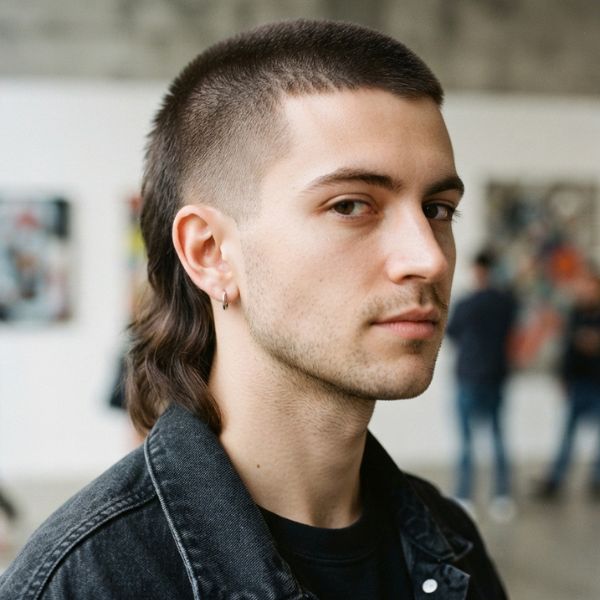
The buzz cut mullet strips the top down to a uniform, short length while leaving the back noticeably longer, creating one of the boldest contrasts in the mullet family.
It’s about as low-maintenance as a mullet gets on top, since a buzzed crown doesn’t need daily styling. The longer back section still needs occasional shaping to keep the line clean, but overall this is the fastest option to maintain day to day.
Who it suits: thinning or fine hair on top, and anyone who wants a wash-and-go routine without giving up the mullet shape entirely.
Short Curly Mullet

Curly hair adds built-in volume, which makes the mullet shape look effortless with minimal styling. Layers cut into the crown open up the curl pattern and reduce bulk, while the back is left slightly longer to curl naturally into the mullet tail.
Because curls shrink as they dry, ask your stylist to cut the length slightly longer than you think you need. A curl that looks perfect wet can shrink up noticeably once it air dries.
Product tip: a lightweight curl cream or leave-in conditioner defines the curls without weighing them down, which is a common mistake with heavier gels on curly mullets.
Short Straight Mullet

Straight hair gives the short mullet a cleaner, more graphic outline since there’s no natural volume to soften the lines. This works in the style’s favor for anyone who wants a sharp, defined silhouette rather than a tousled one.
Because straight hair shows every layer clearly, precision cutting matters more here than in any other variation. Uneven layers or a rushed cut will be far more obvious than on curly or wavy hair.
Styling tip: a matte paste or clay gives texture without shine, keeping the straight mullet looking intentional rather than flat.
Short Wolf Mullet

The wolf mullet blends a shaggy haircut with mullet proportions, creating heavy layering throughout the crown and a choppier, less defined line at the back. It’s messier by design and works best on medium to thick hair that can support multiple layers without thinning out visually.
This is currently one of the most searched mullet variations, largely thanks to its low-effort, high-texture appeal. Unlike the sleek taper or burst fade mullets, the wolf mullet is meant to look a little undone.
Who it suits: thick, coarse, or wavy hair; not ideal for fine hair, since heavy layering can make thin hair look sparse.
Short Shaggy Mullet

Closely related to the wolf mullet, the short shaggy mullet uses soft, feathered layers throughout instead of the heavier chop of the wolf variation. The result is a rounder, more relaxed shape with movement at the crown and a subtly extended nape.
This cut relies on texture rather than sharp lines, which makes it forgiving between barber visits. Slight regrowth just adds to the shaggy look instead of ruining the shape.
Read more: Low Taper Fade Fringe: 18 Stylish Haircuts for Men (2026)
Short V-Back Mullet

The V-back mullet gets its name from the pointed, V-shaped line cut at the nape instead of a straight or rounded edge. That angled line adds a distinct, deliberate finish to the back of the haircut and makes the mullet silhouette easier to spot even at shorter lengths.
Who it suits: anyone who wants the mullet shape to read clearly even with minimal length in the back, since the V shape itself does most of the visual work.
Short Mullet Fade
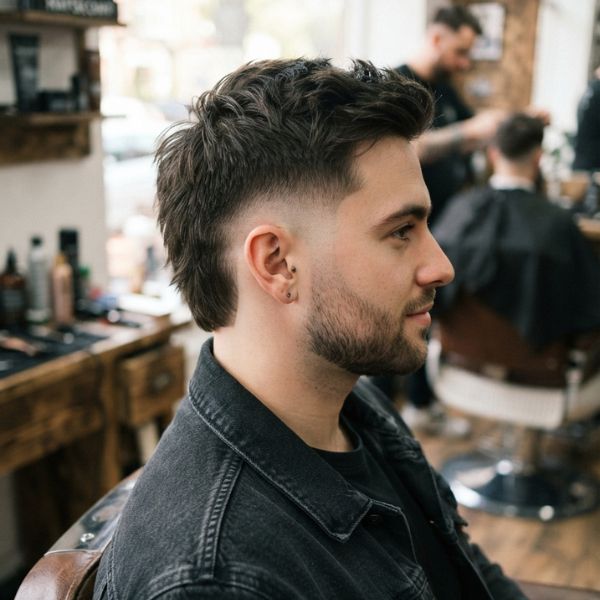
“Short mullet fade” is often used as an umbrella term rather than one specific cut, referring to any short mullet paired with a fade on the sides rather than a taper or scissor cut. It typically combines a low or mid fade with a textured top and a back section left just long enough to qualify as a mullet.
This combination is popular because it gives the cut a sharper, more finished appearance while keeping maintenance predictable, since fades follow a fairly consistent regrowth timeline.
Short Fringe Mullet

The fringe mullet brings the focus to the front of the haircut, adding a forward-swept or curtain-style fringe that frames the face while the back keeps the classic mullet length. It softens angular face shapes and adds visual interest to what might otherwise be a simple crop and fade combination.
Who it suits: square or long face shapes, since a fringe breaks up the forehead and shortens the appearance of the face.
Read more: Quiff Hairstyle for Men: 28 Stylish Variations for a Modern Look
Styling a Short Mullet

Styling a short mullet is simpler than most people expect, but a few habits make a real difference in how polished the cut looks day to day.
- Start on damp, not soaking wet, hair. Product distributes more evenly and holds longer.
- Use a lightweight product on top. A matte clay or texture paste works for straight and wavy hair, while a curl cream suits curly textures.
- Leave the back alone. Most short mullets need little to no product at the nape, since over-styling that section can make the length look unintentional rather than deliberate.
- Blow-dry with your fingers, not a brush, to add lift at the crown without flattening the layers.
- Reapply product sparingly the next day instead of washing daily, since natural oils help hold texture in shorter mullets.
Best Fade for Short Mullet
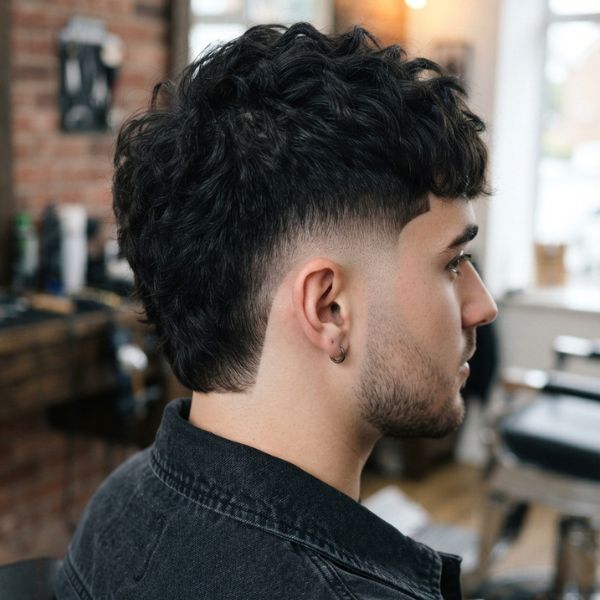
There’s no single “best” fade, since the right choice depends on hair type, face shape, and how often you can get to the barber.
- Taper fade: the most versatile and forgiving option, ideal for beginners and low-maintenance schedules.
- Burst fade: best for adding contrast and energy without a fully bare skin fade.
- Drop fade: flattering for strong jawlines and adds extra depth around the ear.
- Low fade: the safest choice for conservative or professional settings.
- Skin fade: the sharpest, boldest option, but requires the most frequent touch-ups, typically every 2 to 3 weeks.
As a rule of thumb, fades with harder lines look sharper but need more frequent barber visits, while tapers and low fades stretch further between appointments.
Mullet, Low-Maintenance, Short

Short mullets are already easier to maintain than their longer counterparts, but some variations require noticeably less upkeep than others.
Read more: Modern Mullet with Wavy Hair: Effortless Styling Tips
- Lowest maintenance: buzz cut mullet and taper mullet, since neither relies on a hard fade line or heavy daily styling.
- Moderate maintenance: wolf mullet and shaggy mullet, which need occasional layering but forgive regrowth well.
- Higher maintenance: burst fade, drop fade, and skin fade mullets, since sharp fade lines grow out visibly within two to three weeks.
If low maintenance is the priority, ask your barber for a scissor-cut taper on the sides rather than a fade, and keep the top length short enough to air dry without daily styling.
Conclusion
The short mullet’s popularity in 2026 comes down to flexibility. Whether it’s paired with a burst fade for contrast, cut into a wolf mullet for texture, or kept simple with a taper for easy upkeep, there’s a version of this cut for nearly every hair type, face shape, and maintenance schedule.
The best approach is to bring a reference photo to your barber, mention your hair texture and how often you can realistically get a trim, and let them recommend the specific fade or layering technique that fits.
A short mullet done well should look deliberate at every stage of regrowth, not just on the day you leave the chair.
How short can a mullet actually be and still count as a mullet?
As long as the back is visibly longer than the sides and crown, even a half-inch difference is enough to read as a mullet.
Does a short mullet suit fine or thinning hair?
Yes, especially the buzz cut or taper mullet, since minimal layering avoids making thin hair look sparse.
How often does a short mullet need a trim?
Every 3 to 4 weeks for fade versions, and every 5 to 8 weeks for taper or shaggy versions.
Can I get a short mullet with curly hair?
Yes, curly hair actually suits the mullet shape well since the natural volume fills out the cut with little styling effort.
Is a short mullet appropriate for a professional workplace?
Modern short mullets with a low fade or taper and minimal back length are generally office-appropriate, especially the modern mullet or V-back variation.
What’s the difference between a mullet and a wolf cut?
A wolf cut is heavily layered throughout with shaggy texture and only a subtle length difference, while a traditional mullet has a clearer, more defined gap between the short front and longer back.
