

A low taper fade fringe is a men’s haircut with sides that shorten gently around the sideburns and neckline, topped with a longer fringe styled forward. It looks sharp without being severe, and it works in an office as easily as it does on a weekend.
This guide covers 18 versions of the cut, how it compares with a French crop, what to tell your barber, which face shapes and hair types suit it, and how to keep it fresh. Every tip comes from how barbers actually build this cut in the chair.
What Are Low Taper Fade Fringe Haircuts?
This cut pairs two decisions. The first is the taper, where the clippers blend the hair short only at the lowest part of the head, around the sideburns, behind the ears and along the nape. The second is the fringe, which is the longer section on the front of the top that falls toward the forehead.
The word “low” matters. The blend stays below the temples instead of climbing toward the crown, so the cut keeps its natural head shape and grows out cleanly.
Key features at a glance:
- Sides: soft blend at the sideburns, ears and neckline
- Top: roughly 2 to 3 inches (5 to 7.5 cm) for a textured fringe
- Fringe: styled forward, sideways or slightly up
- Contrast: gentle, not stark like a high skin fade
Taper vs Fade: Is There a Difference?
Yes. A taper changes length gradually and usually leaves some hair at the bottom. A fade goes shorter, often down to the skin. A low taper fade sits between the two, so it looks neat while staying subtle.
Low Taper Fade Fringe vs French Crop
| Feature | Low Taper Fade Fringe | French Crop |
|---|---|---|
| Fringe length | Medium, 2 to 3 inches | Short, often 1 to 2 inches |
| Fringe shape | Soft, mobile, textured | Straighter, more compact |
| Sides | Low taper, gentle blend | Taper or fade, often tighter |
| Styling effort | Low to moderate | Low |
| Best for | Men who want movement | Men who want a tidy, short look |
Why Barbers Recommend a Low Taper Fade Fringe
Barbers lean on this cut for practical reasons.
- It suits most people. The low blend flatters round, square and oval heads.
- It grows out well. Because the fade is low, regrowth looks soft instead of shaggy.
- It hides trouble spots. The fringe can cover a high forehead, and the taper cleans up a messy neckline.
- It is workplace friendly. The sides stay neat, so the cut passes in formal settings.
- It adapts. Straight, wavy, curly and thick hair can all carry it with small changes.
1. Textured Low Taper Fade Fringe

This is the most requested version. The top is point cut so the ends look broken and light instead of blunt.
- Best for: straight or slightly wavy hair
- Ask for: point cutting through the fringe, not a straight scissor line
- Style with: matte clay on dry hair
Go easy on thinning. Too much texture makes hair look flat instead of full.
2. Messy Low Taper Fade Fringe
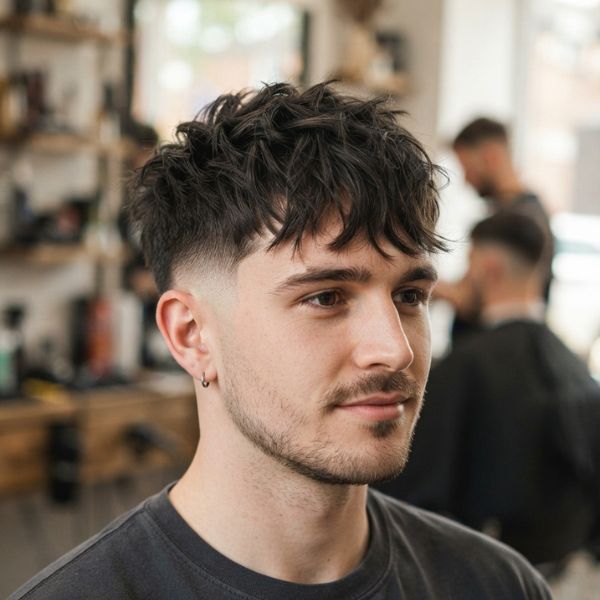
Think undone on purpose. The top has uneven layers that you rough up with your fingers, which gives a casual, streetwear feel.
- Best for: men who hate fussing in the mirror
- Ask for: extra layers and a slightly longer top
- Style with: sea salt spray, then a quick finger dry
3. Curly Low Taper Fade Fringe
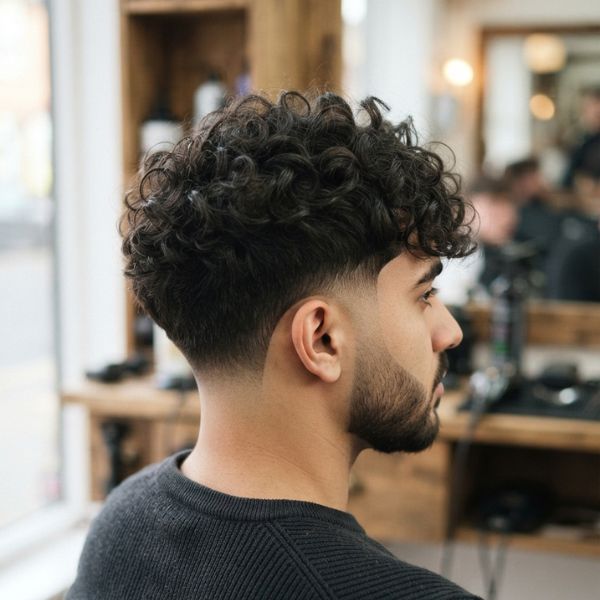
A low taper removes bulk from the sides while the curls fall forward on top. The result is neat edges and a full, bouncy fringe.
- Best for: type 2C to 4A curls
- Ask for: the top cut dry, because curls shrink as they dry
- Style with: curl cream and a diffuser
4. Wavy Low Taper Fade Fringe
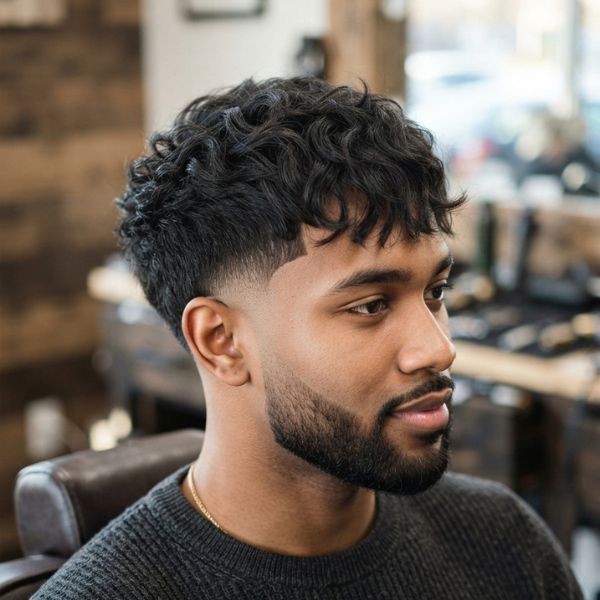
Waves add built-in movement, so this cut needs very little work. Keep the fringe long enough for the wave pattern to show.
- Best for: natural S-shaped waves
- Ask for: length left on top and a soft blend at the sides
- Style with: light mousse at the roots
5. Korean Low Taper Fade Fringe
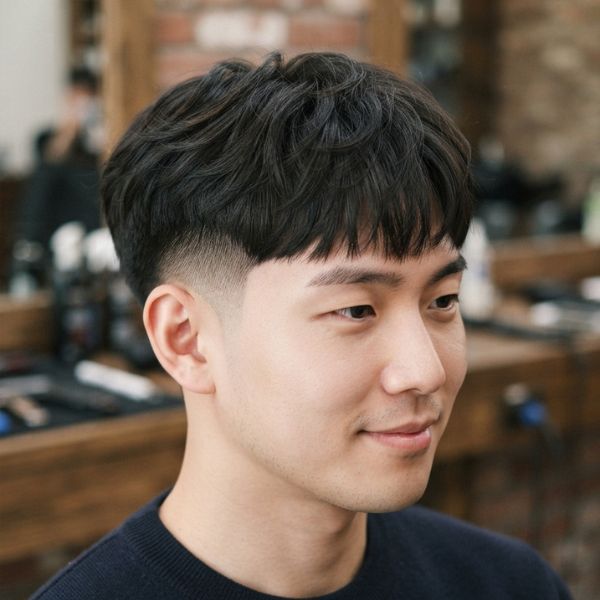
This version is smooth, soft and slightly parted. The fringe often rests across the forehead with light layering and a gentle curve.
- Best for: straight, dense hair
- Ask for: a see-through, layered fringe with a low taper
- Style with: a light cream or a blow dryer for lift
6. Long Fringe Low Taper Fade
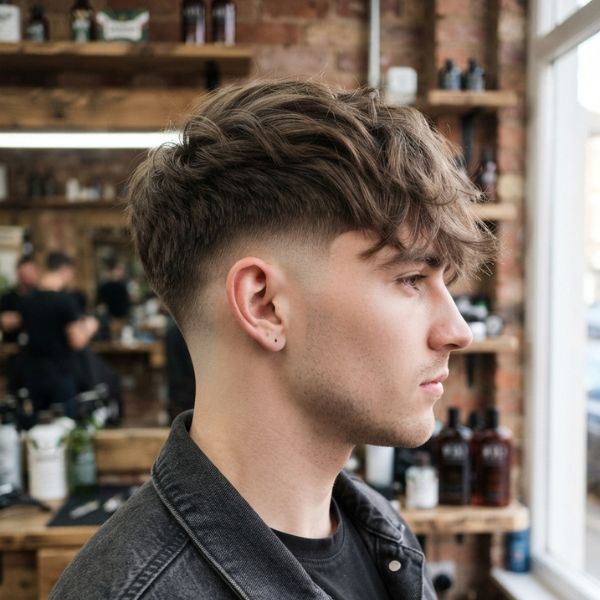
Here the fringe reaches the eyebrows or a little beyond. It is dramatic, but the low taper keeps the sides tidy so it never looks sloppy.
- Best for: men who want length and personality
- Ask for: a fringe long enough to sweep aside
- Style with: a texture cream to control frizz
7. Choppy Low Taper Fade Fringe

The fringe is cut in short, uneven pieces that add grit. It feels edgier than the standard textured version.
- Best for: thick or coarse hair
- Ask for: chopped layers across the front
- Style with: paste for definition
8. Side-Swept Low Taper Fade Fringe
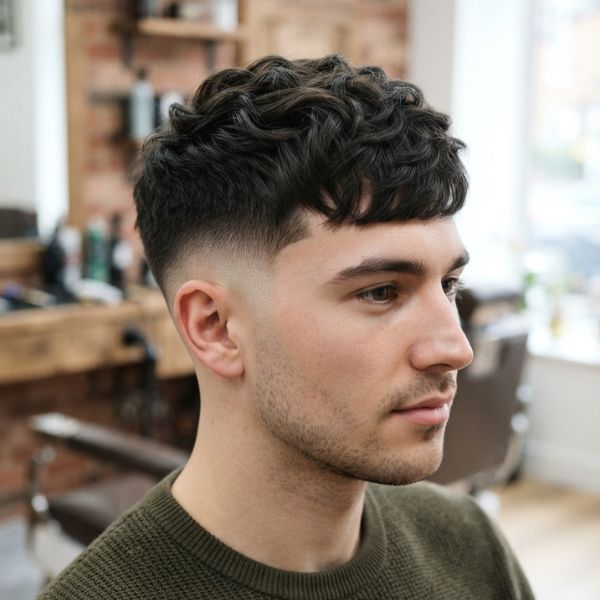
The fringe sweeps across the forehead to one side. It reads polished and works well when you want a smarter look.
- Best for: square and oval faces
- Ask for: a side part with the fringe directed across
- Style with: pomade or light wax
9. Thick Hair Low Taper Fringe
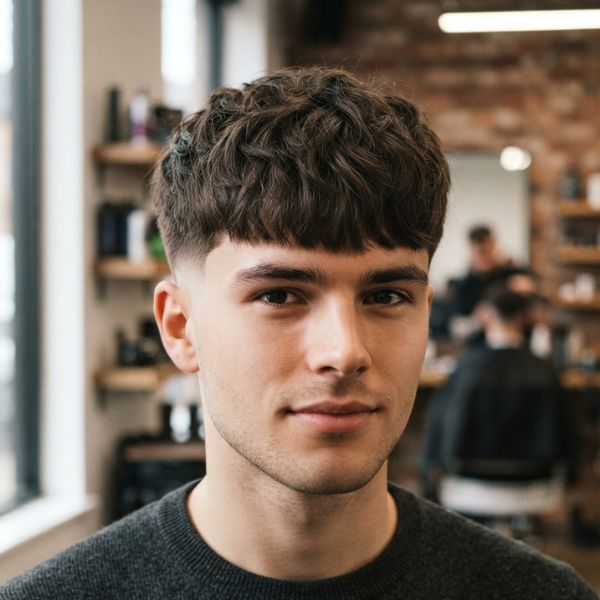
Thick hair can feel heavy, so the barber removes weight inside the fringe. The taper then balances the shape.
- Best for: dense, high volume hair
- Ask for: internal thinning that keeps length
- Style with: a strong hold clay
10. Straight Hair Low Taper Fringe
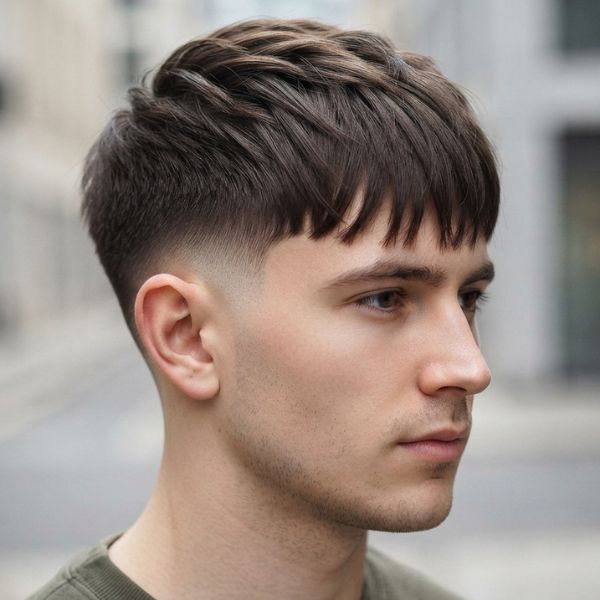
Straight hair can look flat, so the cut leans on layers and a little root lift. A forward fringe shows off the clean lines.
- Best for: fine to medium straight hair
- Ask for: layers and a low taper that follows the nape
- Style with: sea salt spray and a blow dryer
Choosing the Right Fringe Length
Fringe length changes the whole mood of the cut. A half inch can move it from tidy to relaxed.
| Fringe Length | Look | Typical Top Length |
|---|---|---|
| Short | Clean, low effort | 1.5 to 2 inches |
| Medium | Balanced and textured | 2 to 3 inches |
| Long | Dramatic, sweeps aside | 3 to 4 inches |
Tips for choosing:
- Have a low hairline? Go shorter or choose a broken fringe.
- Have a high forehead? A medium to long fringe adds coverage.
- Have curls or waves? Ask for extra length, since hair springs up once it dries.
11. Feathered Low Taper Fade Fringe
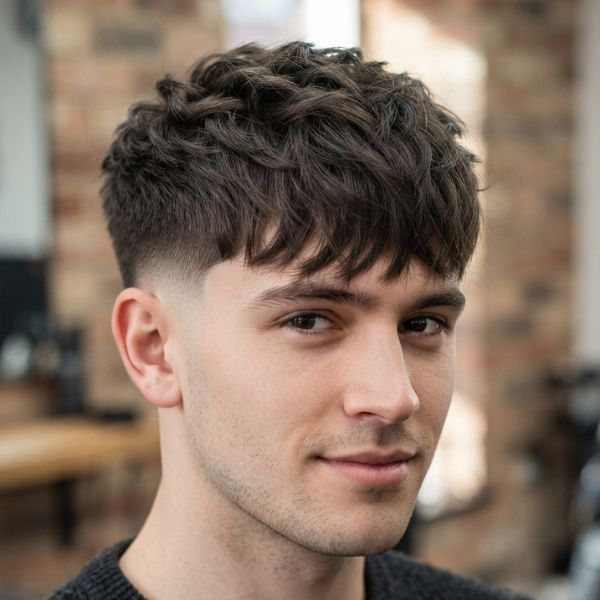
Feathering means cutting the ends so they taper into soft wisps. The fringe looks lighter and moves easily.
Read more: Modern Mullet with Wavy Hair: Effortless Styling Tips
- Best for: fine or medium hair
- Ask for: feathered ends through the front
- Style with: a light spray for hold without stiffness
12. Angular Fringe Low Taper Fade
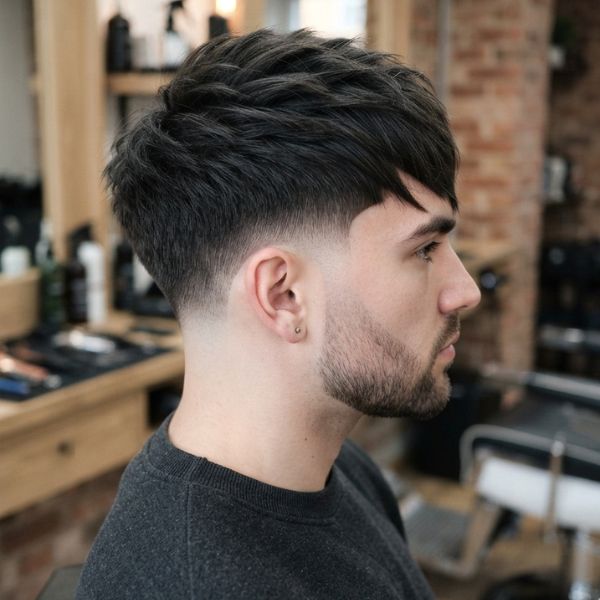
The fringe is cut on a slight diagonal, higher on one side and lower on the other. It adds structure and a modern edge.
- Best for: oval and round faces
- Ask for: an angled front line
- Style with: matte paste
13. Ivy-Inspired Low Taper Fringe

This takes the Ivy League idea of short, neat hair and relaxes it with a forward fringe. It is clean, classic and easy.
- Best for: professional settings
- Ask for: a low taper with a soft side part and a short fringe
- Style with: light pomade
14. Textured Crop Fringe with Low Taper
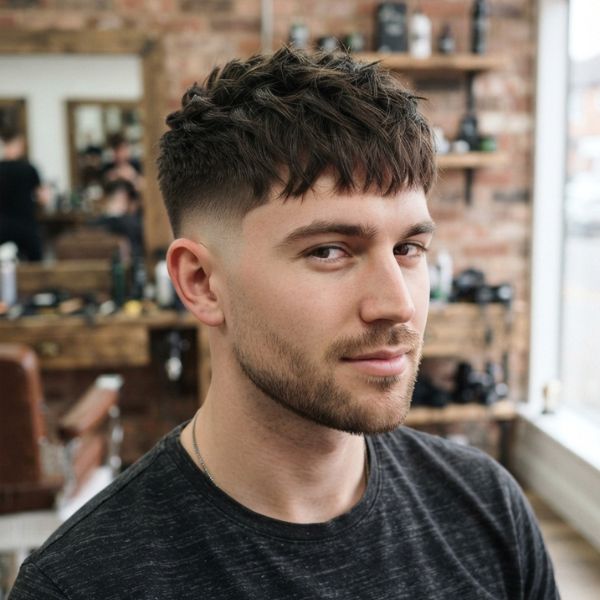
The top is cropped short and heavily textured, so it sits between a French crop and a classic fringe. It is a low maintenance pick.
- Best for: men who want a short but lively top
- Ask for: a crop with a forward, textured fringe
- Style with: a pea-sized amount of clay
15. Modern Curtain Fringe with Low Taper
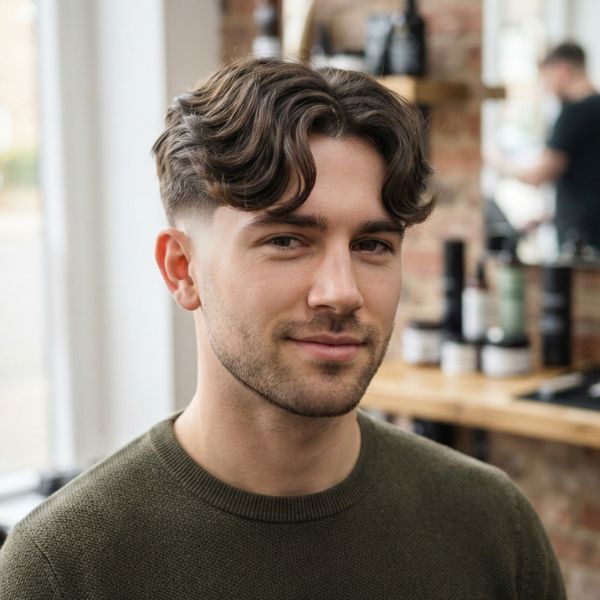
The fringe parts in the center and falls to either side like curtains. The low taper keeps it from looking too retro.
- Best for: straight to wavy hair and longer tops
- Ask for: a center part with a soft, face-framing fringe
- Style with: a blow dryer and light cream
16. Mid Taper Fade
A mid taper starts a bit higher, around the temples. It is a good step up if you want more definition than a low blend gives.
Read more: 11+ Shaggy Mullet Hairstyles 2026 | Modern Messy & Layered Mullet Styles
- Best for: men who like a sharper outline
- Ask for: a taper that starts at the temple, with the fringe kept long
- Style with: clay or paste
17. Messy Low Taper Fade Fringe Straight Hair
This version adds deliberate disorder to straight hair. Cut layers do the work so the fringe does not fall limp.
- Best for: straight hair that needs life
- Ask for: choppy layers and a rough, lived-in finish
- Style with: texture powder at the roots
18. Low Drop Mid Taper Fade Fringe
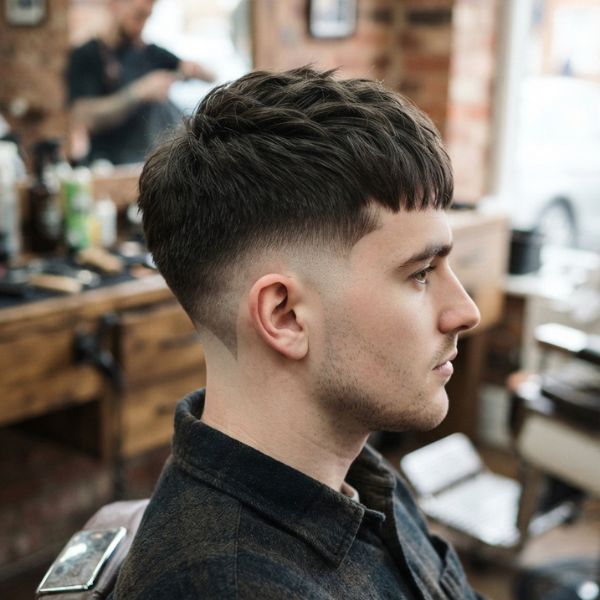
A drop fade curves down behind the ear, following the shape of the skull. Paired with a mid taper, it makes a strong silhouette.
- Best for: men who want something a little different
- Ask for: a fade that arcs low behind the ear
- Style with: matte clay for a defined fringe
How to Ask Your Barber for a Low Taper Fade Fringe
Saying “low taper” is a start, but barbers read it differently. Be specific, and bring photos from more than one angle.
Follow this simple script:
- Name the cut. “I want a low taper fade with a fringe.”
- Point to the height. Show where the blend should end, around the sideburns and neckline.
- State the fringe length. Use inches, such as “about 2.5 inches on top.”
- Mention texture. Ask for point cutting, not thinning that removes body.
- Show a photo. Pick one that matches your hair type.
Sample line: “I’d like a low taper fade blended around my sideburns and neckline, with a textured fringe that falls forward and about 2 to 3 inches on top.”
Also ask your barber about your growth pattern and cowlicks. A good barber will check them before cutting.
Read more: 32 Modern Mullet Fade Hairstyles for Men in 2026: Trendy Cuts and Styling Ideas
Best Face Shapes for a Low Taper Fade Fringe
- Oval: nearly any fringe works.
- Round: add height and texture on top, and choose a side-swept or angular fringe to add length.
- Square: a soft, textured fringe softens strong angles.
- Oblong or long: keep the fringe longer and heavier to shorten the face visually.
- Heart: a side-swept or curtain fringe balances a wider forehead.
- Diamond: a fuller fringe adds width at the forehead.
Best Hair Types
- Straight: needs layers and root lift to avoid looking flat.
- Wavy: the easiest match, since movement is already there.
- Curly: works well if the barber cuts it dry and keeps the shape rounded.
- Thick: needs weight removal so the fringe does not feel heavy.
- Fine or thin: keep the fringe shorter and lightly textured to look fuller.
- Receding hairline: a forward fringe with a short, broken front can help hide it.
Best Styling Products
The product depends on the finish you want.
| Product | Finish | Best For |
|---|---|---|
| Matte clay | Strong hold, no shine | Textured, messy and choppy fringes |
| Paste | Flexible hold | Angular and crop styles |
| Sea salt spray | Light grit and volume | Straight and wavy hair |
| Pomade | Smooth, polished | Side-swept and Ivy styles |
| Curl cream | Definition, less frizz | Curly fringes |
How to style in four steps:
- Towel dry the hair until it is damp.
- Apply a salt spray or mousse at the roots.
- Blow dry the fringe forward, then lift the roots.
- Work a pea-sized amount of clay or paste through the ends.
Maintenance Tips
- Visit your barber every 2 to 4 weeks. The taper loses its shape fast because it is short.
- Trim the fringe every 4 to 6 weeks. This stops it from getting heavy or poking into your eyes.
- Wash two to four times a week. Over-washing strips natural oils.
- Use a light shampoo and conditioner. Heavy formulas weigh the fringe down.
- Protect from heat. If you blow dry daily, use a heat protectant.
FAQs
What is a low taper fade fringe?
It is a haircut with a subtle blend at the sideburns and neckline and a longer fringe styled forward on top.
Is a low taper fade fringe the same as a French crop?
No. A French crop has a shorter, straighter fringe, while this cut keeps more length and movement.
How long should the top be for a textured fringe with a low taper?
Aim for about 1.5 to 2 inches for a short look and 2 to 3 inches for a textured fringe.
How often should I get this haircut trimmed?
Every 2 to 4 weeks for the taper, and about every 4 to 6 weeks for the fringe.
Does this cut work on thin hair?
Yes. Keep the fringe shorter and lightly textured, and use a salt spray for volume.
Can I get this cut with curly hair?
Yes. Ask your barber to cut the top dry and leave extra length to allow for shrinkage.
Is a low taper fade fringe professional enough for work?
Yes. The low blend keeps the sides neat, and a side-swept or Ivy-style version looks especially polished.
Final Thoughts
This haircut stays popular in 2026 because it balances neat and relaxed better than almost any other men’s cut. Choose a fringe length that suits your hairline, bring clear photos, and tell your barber exactly where the taper should sit.
Pick one of the 18 styles above, match it to your face shape and hair type, and book your next appointment with confidence.
