
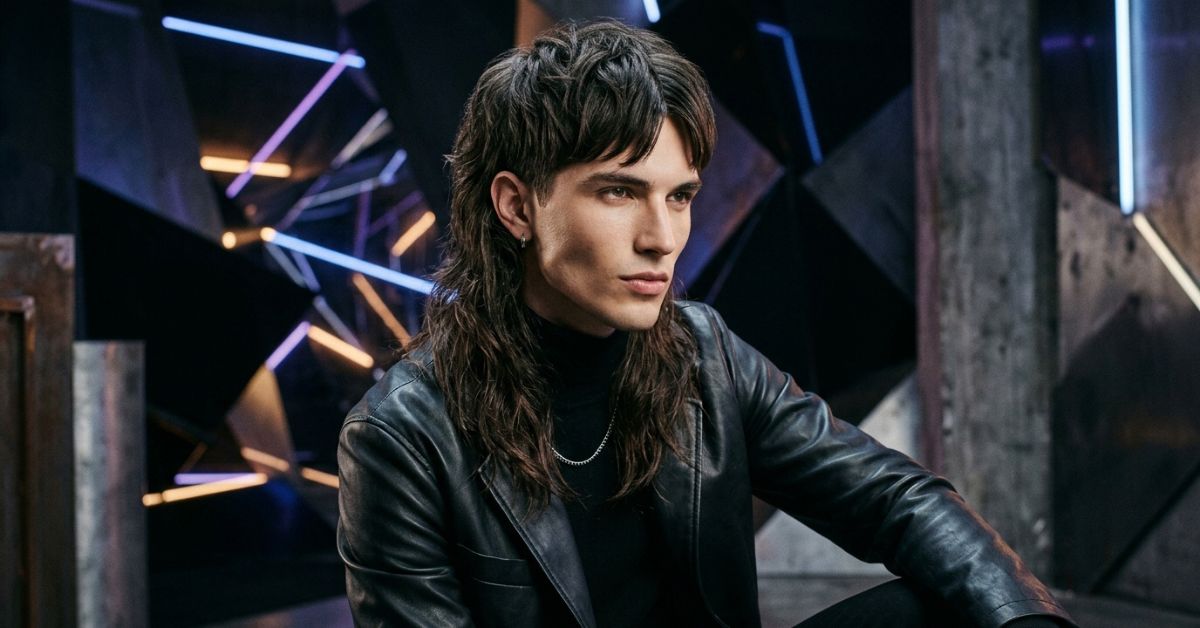
The middle part mullet is one of the most requested haircuts of 2026, and it is easy to see why. It takes the rebellious, party in the back energy of a classic mullet and grounds it with a clean, symmetrical center part up front.
The result feels current, works across straight, wavy, and curly textures, and photographs well from every angle, which matters in an era when most hairstyle decisions start with a saved Instagram or TikTok reference.
Unlike the side swept mullets that dominated the last decade, the center part version reads as more intentional and polished. Barbers report that it has become one of the top three requests among clients under 35, largely because it pairs so naturally with the soft, layered textures that are trending in both men’s and women’s cuts right now.
Whether you already have a mullet and want to update the part, or you are starting from scratch, this guide breaks down every major variation, how to style it, and which version suits your face shape and hair type best.
Top 10 Middle Part Mullet 2026
Before diving into individual cuts, it helps to understand what separates a great middle part mullet from an average one.
The strongest versions share three traits: enough length on top to fall naturally into a part, layering that blends the shorter sides into the longer back without harsh lines, and a texture that supports movement rather than fighting it. With that foundation in place, here are the ten defining middle part mullet styles shaping 2026.
Middle Part Wolf Mullet

The wolf mullet is a shaggy, heavily layered hybrid between a wolf cut and a traditional mullet. Layers are cut throughout the crown and mid lengths to create volume and texture, while the middle part keeps the front controlled instead of falling into a messy fringe. This version tends to look tousled almost on purpose, which is exactly the point.
- Best for thick or medium density hair that can support heavy layering
- Requires texturizing spray or sea salt spray to enhance the shag effect
- Works well on oval and round faces because the layers add height at the crown
Middle Part Straight Mullet

For those with naturally straight hair, this variation keeps things sleek and structured. The part stays razor sharp, the top falls flat and glossy on either side, and the back maintains classic mullet length without excess layering. It is the lowest maintenance option on this list because straight hair naturally falls into place after a blow dry.
- Ideal for fine to medium straight hair
- Minimal product needed, usually just a lightweight serum
- Delivers a clean, almost editorial finish
Middle Part Wavy Mullet

Natural waves add effortless texture to the middle part mullet without any extra styling effort. The waves create soft movement around the part, and the back holds a relaxed, beachy shape rather than looking rigid. This is one of the most popular requests among people who already have wavy hair, since it works with the texture instead of trying to change it.
- Air drying with a curl cream enhances natural wave pattern
- Suits square and rectangular faces by softening angular jawlines
- Holds well between salon visits with minimal upkeep
Middle Part Korean Mullet
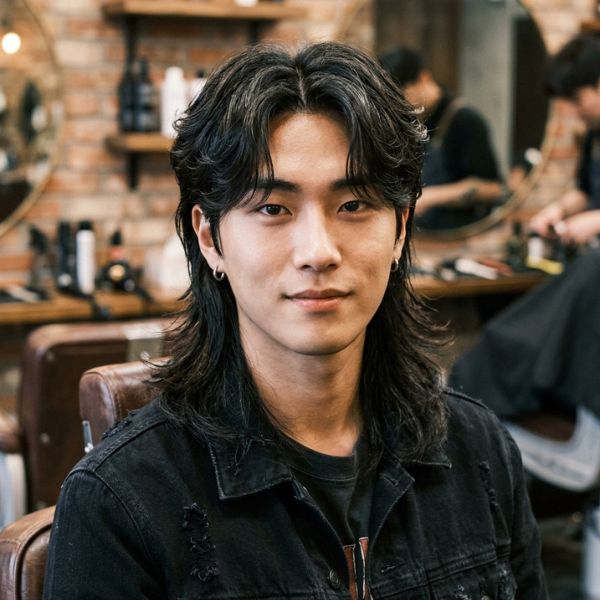
Inspired by Korean and East Asian street style, this cut pairs a soft curtain fringe with a gently tapered back and no harsh lines anywhere in the blend. It reads soft, youthful, and effortlessly stylish, which explains why it has become one of the most searched hairstyles among younger men and women influenced by K-pop and K-drama aesthetics.
- Front sections are cut to cheekbone length and swept outward from the part
- Back stays tapered rather than shaved for a softer overall silhouette
- Pairs well with a subtle ash or cool toned dye for added dimension
Middle Part Mullet Asian
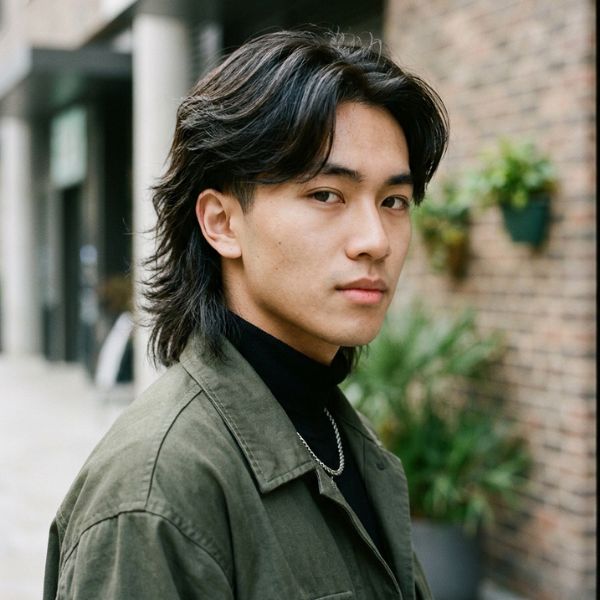
For Asian hair textures, which tend to be thicker and straighter with less natural volume at the root, stylists often add internal layering to prevent the front from sitting too flat. A light texturizing powder at the crown helps the part hold shape throughout the day, and regular trims every four to six weeks keep the curtain effect crisp instead of growing out into a shapeless fringe.
Read more: 12 Middle Part Mullet Variations for 2026: Modern Center Part Mullet Styles
Middle Part Shaggy Mullet

The shaggy mullet leans into deliberate messiness. Layers are choppy and uneven by design, the ends are textured with a razor rather than scissors, and the middle part is meant to look slightly undone rather than perfectly symmetrical. It is a favorite among people who want the mullet silhouette without looking overly groomed.
- Works best with medium to thick hair density
- Styled using a matte texture paste for a lived in finish
- Low maintenance once the initial cut is dialed in
Middle Part Taper Mullet

This version keeps the sides tapered rather than faded or shaved, creating a softer transition between the short sides and the longer back. The middle part stays crisp and symmetrical, making it one of the most versatile, work friendly options on this list. It suits nearly any hair type and reads as polished enough for a professional setting while still carrying mullet energy in the back.
- Low maintenance, needs touch ups roughly every four to five weeks
- Suits square and oval face shapes especially well
- A safe entry point for first time mullet wearers
Middle Part Textured Mullet

Texture is added throughout the top and back using point cutting or a razor, giving the hair a broken up, dimensional finish rather than one uniform length. This variation photographs particularly well because the texture catches light differently depending on the angle, adding visual depth.
- Best suited to straight or wavy hair
- Ideal for rectangular face shapes needing softened lines
- Requires a texturizing spray to maintain the broken up effect between washes
Middle Part Curly Mullet

Curly hair brings natural volume and definition to the middle part mullet without much extra work. The part separates the curls evenly on either side, while the back retains length and bounce. This variation tends to shrink slightly as curls dry, so stylists usually cut it a bit longer than the desired finished look to account for shrinkage.
- Diffusing with a curl defining cream keeps curls separated at the part
- Works beautifully on oval and rectangular face shapes
- Lower maintenance since curls naturally camouflage regrowth
Middle Part V Back Mullet

The V back mullet gets its name from the back section, which is cut into a soft V shape rather than a blunt horizontal line. This adds a more tailored, feminine edge to the classic mullet silhouette and pairs especially well with straight or slightly wavy hair that shows off the V line clearly.
- Suits oval and square face shapes
- Requires a skilled stylist to cut the V line precisely
- Works for both straight and wavy textures with medium upkeep
Middle Part Drop Fade Mullet

The drop fade mullet takes the sides down to a sharp, sloped fade behind the ear, creating maximum contrast against the longer top and back sections. This is the boldest, most high maintenance variation on the list, but it also delivers the most dramatic, modern silhouette of any middle part mullet style.
- Requires fade touch ups every two to three weeks
- Best for thick or coarse straight hair that holds the top’s shape
- Suits square and oval face shapes with high visual impact
Middle Part Mullet Straight Hair

Straight hair holds the drop fade contrast especially well because there is no wave pattern competing with the sharp fade line. To keep the part looking fresh day to day, apply a lightweight pomade to damp hair, comb the part with a fine tooth comb, and let the top air dry or blow dry on a low heat setting to avoid frizz.
Styling Middle Part Mullet

Getting the middle part mullet to look intentional rather than accidental comes down to a consistent routine, not a complicated one.
- Start with damp, towel dried hair and apply a lightweight styling cream or texturizing spray, avoiding heavy products near the roots.
- Use a fine tooth comb or your fingers to create the part, working from the front hairline straight back through the crown.
- Blow dry with a round brush if you want lift at the roots, or air dry for a more natural, relaxed finish.
- Train the part by consistently styling it in the same direction after every wash, since hair naturally learns to fall that way over time.
- Finish with a small amount of matte paste or dry texture spray on the ends to define layers without adding shine or weight.
Controlled volume matters more than most people realize. Volume should build gradually at the crown and taper down smoothly rather than spiking randomly, since uneven volume is usually what makes a mullet look unintentional instead of styled.
Read more: 32 Modern Mullet Fade Hairstyles for Men in 2026: Trendy Cuts and Styling Ideas
Easy Care for Middle Part
The middle part mullet is more forgiving than most haircuts, but a few habits keep it looking sharp between salon visits.
- Book a trim every four to six weeks to maintain the short to long contrast that defines the mullet silhouette.
- Wash hair two to three times a week rather than daily, since natural oils help the part hold its shape and texture.
- Use a heat protectant before any blow drying or styling to protect the longer back section from split ends.
- Sleep on a silk or satin pillowcase to reduce frizz and preserve wave or curl pattern overnight.
- Avoid over brushing the top section, since brushing tends to disrupt the natural fall of a center part.
Trending Middle Part Looks
| Style | Best Hair Type | Best Face Shape | Maintenance |
| Taper Mullet | Any | Square, oval | Low |
| Textured Mullet | Straight, wavy | Rectangular | Medium |
| Curly Mullet | Curly | Oval, rectangular | Low |
| V Back Mullet | Straight, wavy | Oval, square | Medium |
| Drop Fade Mullet | Straight | Square, oval | High |
| Korean Mullet | Straight, wavy | Long, oval | Medium |
| Wolf Mullet | Thick, medium | Oval, round | Medium |
Most Suitable Face Shapes for the Middle Part Mullet
- Oval faces can wear almost any variation since the shape is already balanced and rarely needs correcting.
- Square and rectangular faces look great with a taper or drop fade, which adds softness near the jaw without hiding its structure.
- Round faces benefit from added height at the crown, so a wolf or textured mullet works best to elongate the face visually.
- Long faces should ask for a curtain fringe or Korean mullet to add width visually and break up length through the front.
- Heart shaped faces do well with a wavy or shaggy mullet, since soft layers around the jaw balance a wider forehead.
Read more: 2 Guard Buzz Cut: How It Looks, Length & Styling Guide (2026)
Frequently Asked Questions
Is the middle part mullet still trending in 2026?
Yes. It remains one of the most requested haircuts of 2026, driven by strong visibility on social platforms and its ability to work across nearly every hair type and face shape.
How long does it take to grow a middle part mullet?
Most people need three to five months of growth at the back while keeping the sides and top trimmed regularly to maintain the short to long contrast.
Can fine hair handle a middle part mullet?
Yes, though fine hair does best with a taper or straight mullet variation, since heavier shag styles can look thin without added layering and volumizing products.
Does the middle part mullet work for curly hair?
Absolutely. Curly hair adds natural volume and texture, and the part simply divides the curls evenly, though stylists usually cut it slightly longer to allow for curl shrinkage.
How often should I trim a middle part mullet?
Every four to six weeks is standard for most variations, though drop fade versions need touch ups every two to three weeks to keep the fade line sharp.
Conclusion
The middle part mullet has earned its place as one of the defining hairstyles of 2026 because it takes a bold, expressive cut and gives it structure and balance.
Whether your hair is straight, wavy, curly, thick, or fine, there is a version of this cut built for your texture and face shape, from the soft Korean curtain look to the dramatic drop fade.
The key to pulling it off long term comes down to three things: working with your natural hair type instead of against it, keeping up with regular trims to maintain the contrast between length and shape, and choosing products that support movement rather than weighing the hair down.
With the right variation and a little consistency in styling, the middle part mullet is one trend worth committing to well beyond 2026.
