
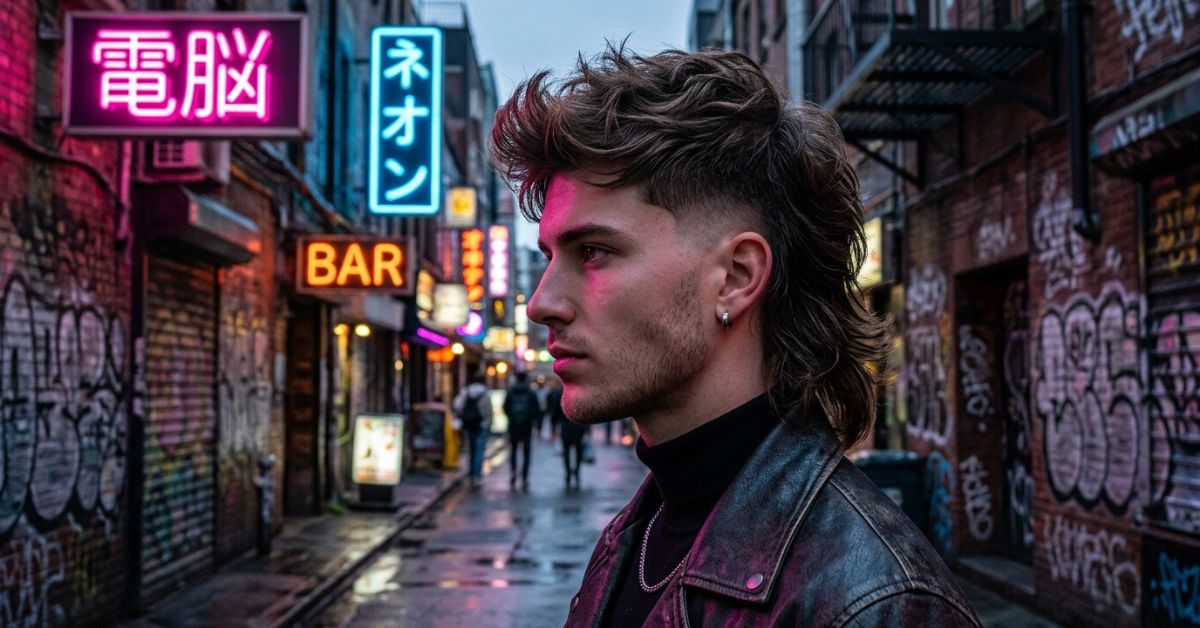
The mullet has moved on from being a punchline. Barbers now pair it with a crisp, blended fade instead of the choppy, unbalanced look it wore in the past, and that single change has turned it into one of the most requested cuts of 2026.
A modern mullet fade keeps the sides tight and clean while the crown and nape grow out with texture and movement, giving men a shape that reads as bold, current, and genuinely easy to maintain. Below is a full breakdown of 32 mullet fade variations, how each one fits different hair types and face shapes, and how to keep the cut sharp between barber visits.
What Is a Modern Mullet Fade

A modern mullet fade combines two haircuts in one. The sides and back are faded down to short hair or skin, and the top plus the nape are left longer and layered. The fade creates a smooth, gradual transition instead of the harsh, uneven line that defined the original 1980s mullet. Barbers can place that fade low, mid, or high, and they can leave the back short and rounded or long and shaggy, which is why the style works on nearly every hair texture and lifestyle.
Consumer research from the barbershop chain Sport Clips Haircuts found that a large share of American men now rank the mullet among their favorite vintage styles to bring back, and industry data tracked by WWD showed a sharp year-over-year jump in searches for shorter, low-key versions of the cut, often called the mini mullet. That surge lines up with what barbers are seeing in the chair: more clients asking for a tidy fade with just enough length in the back to feel different from a standard taper.
| Fade Placement | Where It Sits | Best For |
|---|---|---|
| Low fade | Just above the ears | First-timers, office settings |
| Mid fade | Between the temple and the crown | Balanced, versatile everyday wear |
| High fade | Near the top of the head | Bold, high-contrast statement looks |
Modern Burst Fade
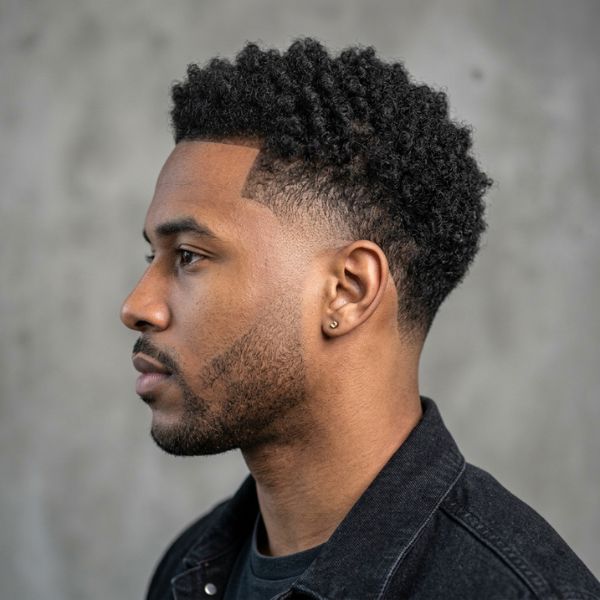
The burst fade curves around the ear in a rounded, sunburst shape instead of running in a straight line. It draws the eye toward the top of the head while keeping the mullet length in the back full and textured. This version suits thick or straight hair and needs only a light clay to define the top each morning.
Classic Modern Mullet Fade
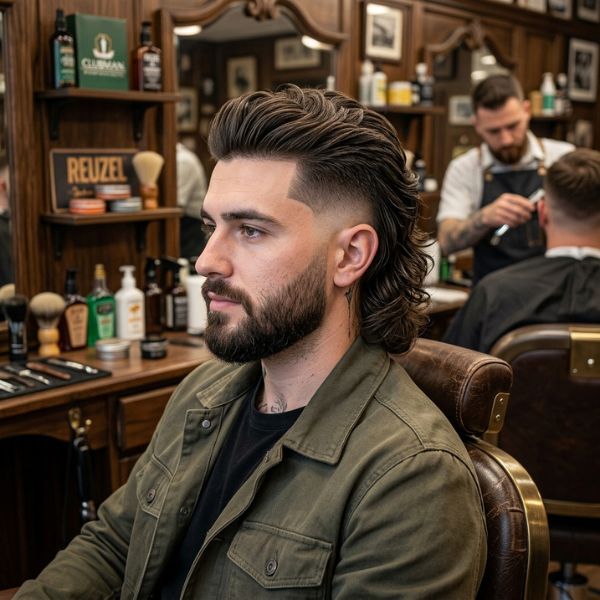
This is the baseline version most men picture when they hear “mullet fade.” The sides are faded to a clean, even length, the top is layered for movement, and the back sits just past the collar. It is a safe entry point for anyone trying the style for the first time.
Low Modern Mullet Fade

A low fade starts just above the ear, which keeps the overall look subtle and workplace friendly. The contrast between the sides and the top is soft rather than sharp, so this variation suits men who want the mullet shape without a bold statement.
Mid Modern Mullet Fade
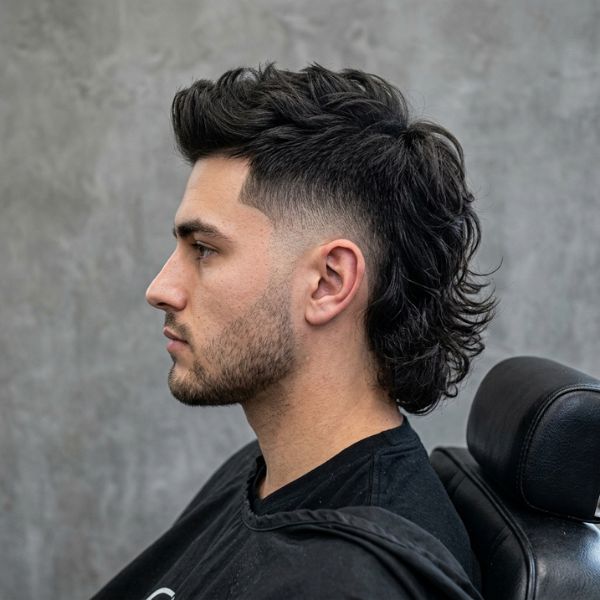
Sitting between the temple and the crown, the mid fade offers a balance of contrast and versatility. It is one of the most requested placements because it looks sharp with both short and long back sections and works for almost any hair density.
High Modern Mullet Fade
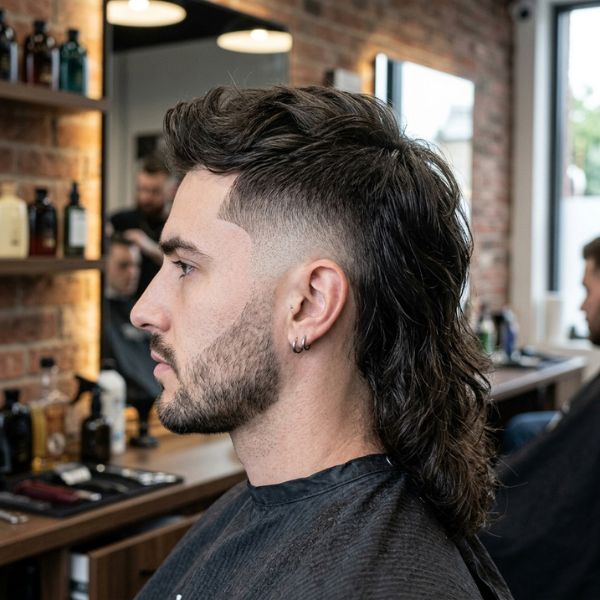
The high fade starts near the top of the head, creating the strongest contrast against the longer mullet hair. It is a confident, high-maintenance option that suits guys who like a bold silhouette and do not mind more frequent barber visits to keep the line crisp.
Textured Modern Mullet Fade

Choppy, razor-cut layers throughout the top and back give this version a rougher, lived-in finish. A matte paste or clay brings out the separation between strands, and the texture also hides some of the growing-out phase between cuts.
Curly Modern Mullet Fade

Natural curls add volume on top while the fade keeps the sides controlled and neat. This variation works especially well because curls naturally create the fullness that straight-haired guys often have to style in. A curl cream helps define ringlets without weighing them down.
Modern Mullet Low Fade
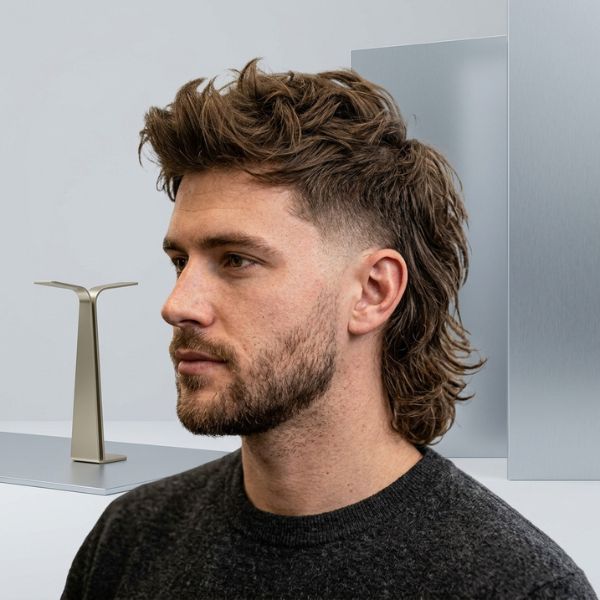
Similar to the low fade above but with slightly more length retained in the back, this version leans conservative while still carrying the mullet’s signature drop. It is a strong choice for men who want to test the trend before committing to a bolder cut.
Wavy Modern Mullet Fade
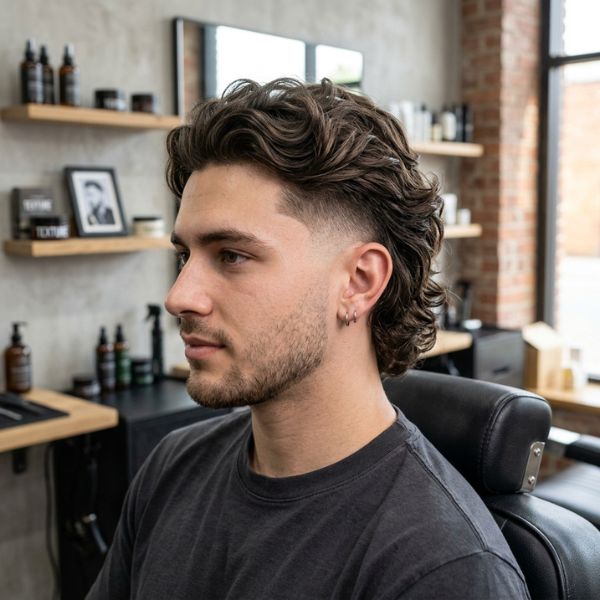
Loose, natural waves add movement to the top and back without needing heat styling every day. Paired with a fade, the waves read as effortless rather than messy, and a sea salt spray enhances the texture after a shower.
Straight Hair Fade Mid Modern Mullet

Straight strands give this mid fade a sleek, structured finish, especially when the top is blow-dried and combed back. The clean outline of the fade contrasts nicely against the smooth flow of the back section, giving a polished, almost formal edge to a rebellious cut.
Skin Fade Modern Mullet

A skin fade takes the sides down to bare skin before blending into the longer hair above. It is the highest-contrast fade option and makes the mullet shape look sharp and intentional rather than accidental. Regular touch-ups every two to three weeks are needed to keep the skin line fresh.
Taper Fade Modern Mullet

A taper fade blends gradually into the neckline instead of dropping to skin, which gives a softer, more professional look than a skin fade. It suits men who want the mullet silhouette but still need a cut that reads well in an office environment.
Burst Fade Modern Mullet

This is the burst fade approach applied with extra length retained at the nape, creating a stronger drop-off between the faded sides and the flowing back. It photographs well and is popular among younger guys who follow barber trends on social media.
Fringe Modern Mullet Fade

A fringe or curtain bang across the forehead softens the whole shape and adds a slightly retro, 90s-inspired feel. Paired with a clean fade on the sides, the fringe keeps the cut from feeling too aggressive while still delivering mullet length in the back.
Modern Mullet Fade Line Design

For guys who want extra detail, a barber can shave a thin part line or geometric pattern into the fade. It adds a custom, artistic touch and works especially well on darker hair where the line design shows up clearly against the skin.
Middle Part Modern Mullet Fade

Hair is parted down the center and left to fall naturally on both sides, paired with tapered sides and mullet length in the back. This version blends vintage styling cues with a distinctly modern fade and suits wavy or slightly thick hair best.
Modern Mullet Fade Straight Hair
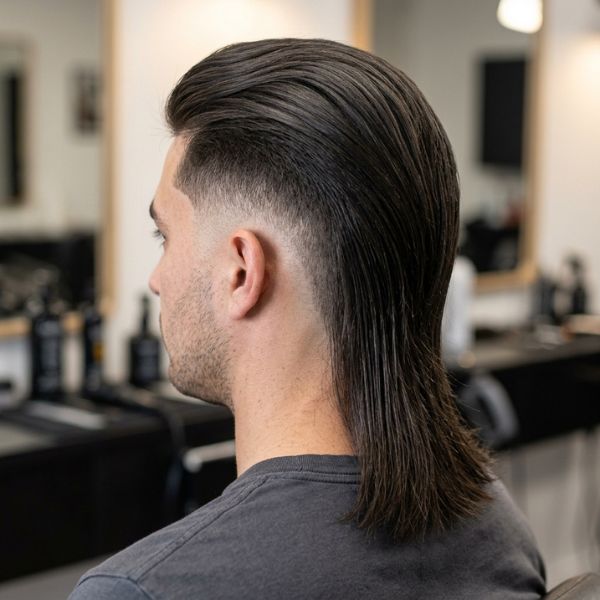
Built specifically around straight strands, this cut relies on the fade to add all the contrast since straight hair does not naturally add volume. A light pomade or texture spray helps prevent the top from looking flat throughout the day.
Asian Modern Mullet Fade
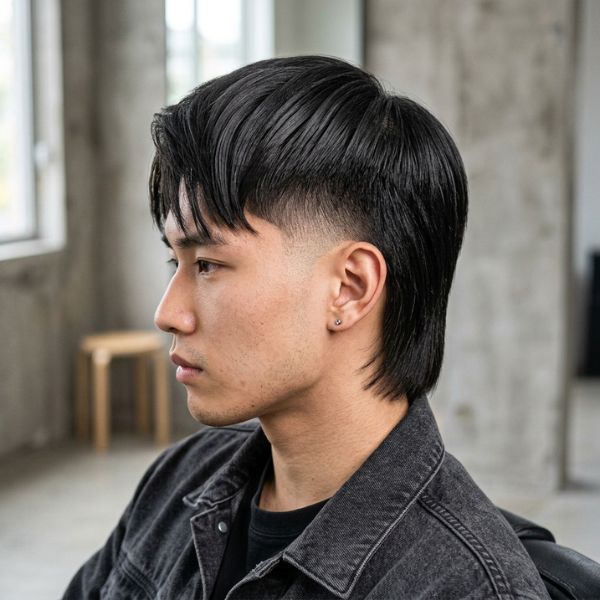
This variation is tailored to thicker, straighter Asian hair textures, usually with a soft, low or mid fade and a slightly longer, swept top. It has become popular partly through Korean and Japanese street style influence and works well with minimal daily styling.
Fine Hair Modern Mullet Fade

Fine hair benefits from shorter layers on top and a lower fade, since heavy length can make thin strands look limp. A volumizing mousse applied at the root before blow-drying gives the illusion of thicker hair without extra product weight.
Fade of the Modern Mullet

This is simply another way barbers and clients describe the core fade component itself, the smooth blend that separates the short sides from the longer crown and nape. Getting this transition right is what separates a modern mullet from an old-fashioned one.
Permed Modern Mullet Fade

A loose body wave or spiral perm adds curl and volume to straight hair, giving the top and back extra dimension. Combined with a fade, the perm creates a rock-inspired, retro-modern silhouette that needs a curl-defining cream to keep its shape between washes.
Fluffy Modern Mullet Fade

Blow-dried with a round brush and finished with a light mousse, this version puffs the top and back up for a soft, voluminous shape. It suits men with medium to thick hair who want a playful, youthful look rather than a sleek one.
Beard Combo Contemporary Mullet Fade
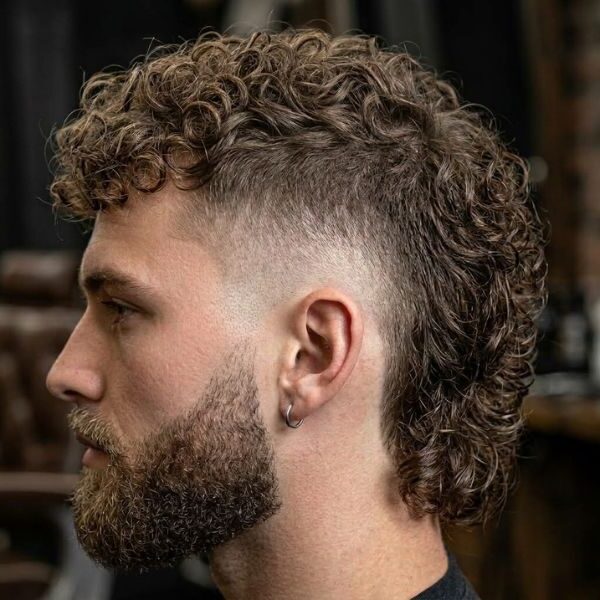
Pairing the mullet fade with a well-groomed beard balances the longer hair on top with structure on the jawline. This combination is especially popular with men in their late twenties and thirties who want a rugged, put-together appearance.
V Back Modern Mullet Fade

The hairline at the nape is cut into a V shape instead of a straight or rounded line, adding a subtle design detail at the back of the neck. It works well with shorter mullet lengths where the neckline is more visible.
Layered Modern Mullet Fade

Multiple layers are cut throughout the top and back to remove bulk and add shape, which keeps thicker hair from looking heavy. This version is highly adaptable and can be dressed up with a comb-over top or left loose and natural.
Undercut Modern Mullet Fade

An undercut takes the sides down aggressively short, almost like a shaved look, while the top stays long and full. It creates one of the boldest contrasts on this list and pairs especially well with curly or coily hair textures.
Read more: 2 Guard Buzz Cut: How It Looks, Length & Styling Guide (2026)
Sporty Modern Mullet Fade
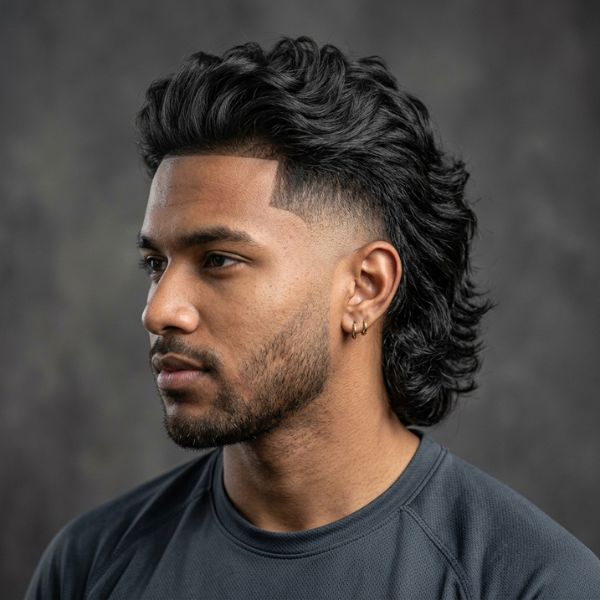
Kept short and practical, this version is built for an active lifestyle. The fade is usually mid to high, the top is cropped shorter than other variations, and the back is trimmed just enough to keep the mullet identity without getting in the way during workouts.
Mexican Modern Mullet Fade

Popularized by soccer culture and street style across Mexico and Latin America, this variation usually features a high or mid fade, a textured top, and a slightly longer back. It often pairs with a line-up along the hairline for extra sharpness.
Korean Modern Mullet Fade

Leaning into K-pop styling, this version uses a curtain fringe, a subtle wave, and a low or mid fade for a soft, trend-forward finish. It favors natural movement over heavy styling products, matching the minimalist grooming approach common in Korean men’s fashion.
Wolf Cut Modern Mullet Fade
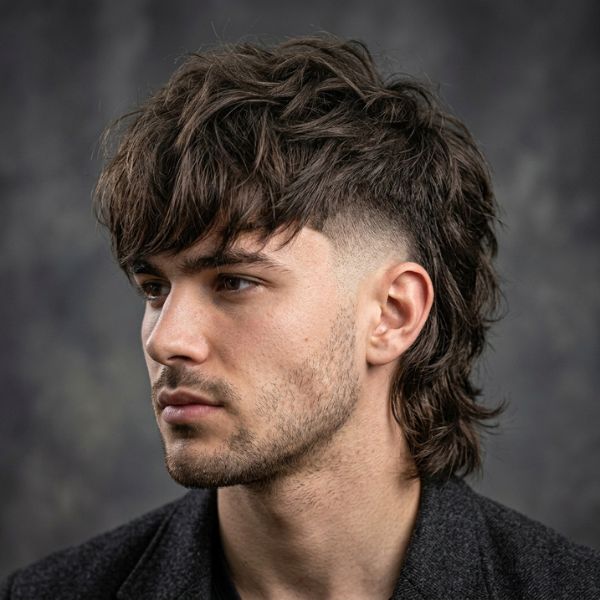
Heavy, shaggy layers run throughout the cut, blending wolf cut texture with mullet proportions for a rock-inspired, high-volume shape. It is one of the most requested versions among younger clients right now and works best on medium to thick hair.
Long Modern Mullet Fade
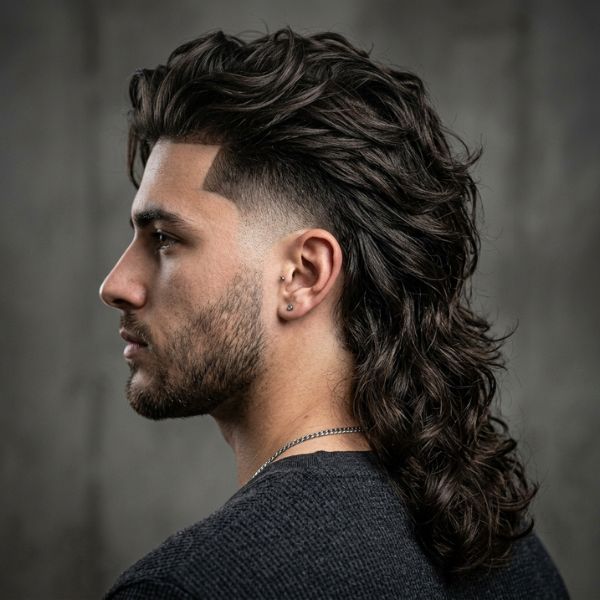
This variation goes all in on back length for maximum contrast against the fade. It is a bold, attention-grabbing choice that requires more frequent trims to keep the shape intentional rather than simply unkempt.
Short Modern Mullet Fade
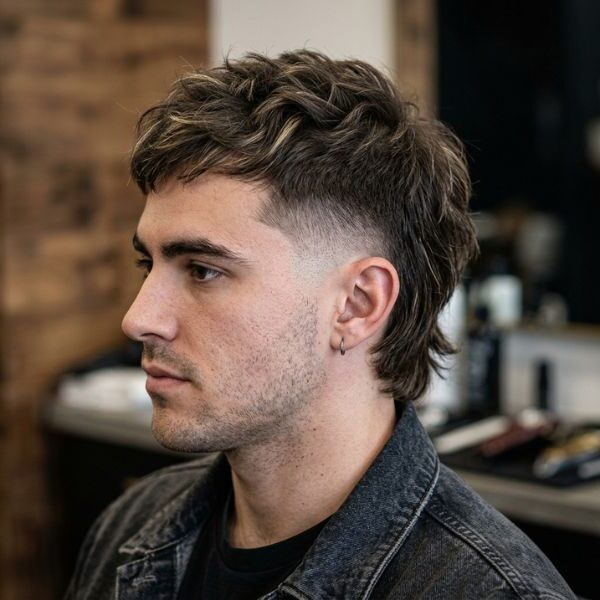
A shorter, more subtle take on the trend, sometimes called a mini mullet, keeps just a small amount of extra length at the nape. It is the easiest version to wear in conservative workplaces while still carrying the mullet’s signature silhouette.
How to Ask Your Barber for a Modern Mullet Fade

Clear communication makes the difference between a great mullet fade and a disappointing one. Use these steps at your next appointment.
- Bring one or two reference photos that match your current hair length and texture, not just a celebrity look you like.
- Specify the fade height you want: low, mid, or high, since this single detail changes the whole shape of the cut.
- Tell your barber how much length to leave at the crown and nape so they know how dramatic to make the back section.
- Mention your hair type, since curly, wavy, and straight hair all behave differently once the fade grows out.
- Ask for a conservative first cut if you are unsure, since it is easier to go shorter or bolder next time than to grow out a fade you regret.
Premium Fade Cuts for Your Mullet Hair
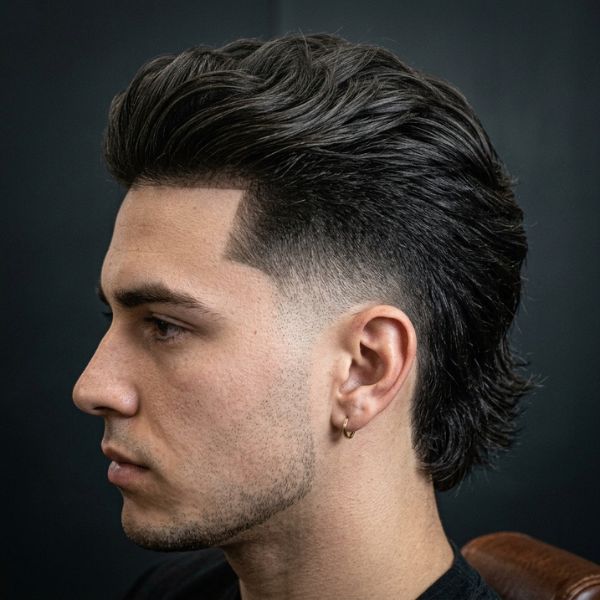
Not every fade is created equal, and paying for a barber who specializes in precision fading is worth it for this haircut in particular. A skin fade or burst fade requires careful blending with clippers and often a straight razor finish along the hairline. Shops that offer a premium or executive fade package typically include a hot towel, a clean neckline shave, and a consultation on the exact fade height, which helps the cut look sharper for longer and reduces awkward regrowth between visits.
How to Style a Fresh Modern Mullet Fade Without Effort

A mullet fade is easier to maintain than it looks once you find a simple daily routine.
- Rinse and towel-dry hair until it is damp, not soaking wet, before applying product.
- Work a small amount of matte clay or light pomade through the top and back to define texture.
- Use a wide-tooth comb or your fingers to shape the top rather than a fine-tooth comb, which can flatten volume.
- Let curly or wavy hair air-dry for a more natural finish, or blow-dry with a round brush for extra lift.
- Touch up the fade edges with a trimmer between barber visits if you want the sides to stay crisp.
Best Face Shape for a Modern Mullet Fade Haircut
The right fade height and top volume can flatter almost any face shape when chosen correctly.
| Face Shape | Recommended Style |
|---|---|
| Round | More height and volume on top to visually elongate the face |
| Square | Softer, textured layers that soften strong jaw angles |
| Oval or oblong | Most flexible, works with nearly any fade height |
| Heart | A mid fade with fuller sides balances a narrower chin |
The Secret to Keeping a Modern Mullet Fade Longer
Maintaining a mullet fade is mostly about consistency rather than complicated products.
- Schedule a fade touch-up every two to four weeks depending on how high or low the fade sits.
- Use a lightweight, sulfate-free shampoo to avoid drying out the longer back section.
- Apply a leave-in conditioner or light oil to the ends of the back hair to prevent split ends as it grows.
- Sleep on a satin or silk pillowcase to reduce friction and frizz on the longer strands.
- Trim the back section slightly every visit instead of letting it grow unchecked, which keeps the mullet shape intentional rather than shaggy.
Frequently Asked Questions
Is the modern mullet fade still trendy in 2026?
Yes, it remains one of the most requested men’s haircuts in 2026, with barbers reporting steady demand for both bold and subtle versions.
What fade height works best for a first-time mullet?
A low or mid fade is the safest starting point since it offers a modern look without an overly dramatic contrast.
How often should I get my mullet fade trimmed?
Most men need a touch-up every two to four weeks to keep the fade lines clean while letting the back continue to grow.
Does a modern mullet fade work with curly hair?
Yes, curly hair adds natural volume on top, which pairs especially well with a clean, faded side section.
Can I style a mullet fade without daily heat styling?
Yes, a light clay or sea salt spray on damp hair is often enough, especially for wavy or curly textures.
Conclusion
The modern mullet fade has earned its place as one of 2026’s defining men’s hairstyles because it adapts to nearly any hair type, face shape, and daily routine. Whether you lean toward a subtle low taper or a bold skin fade paired with a wolf cut back, the formula for success stays the same: a clean blend, the right amount of length, and regular maintenance. Take this guide to your next barber appointment, point to the variation that matches your style, and let the cut do the rest.
