


Looking for a haircut that looks sharp at the office and relaxed on the weekend? The low taper fade textured top pairs neatly tapered sides with a longer, choppy top that holds shape and adds volume.
Men search for it to learn what it is, which version suits their hair, and exactly what to tell the barber. This guide answers all three. You will see how the cut works, who it suits, how to style it with simple products, and 15 style variations for straight, wavy, curly, and thick hair. You will also get a clear barber script and a simple trim schedule, so you walk out with the cut you pictured.
What Is a Low Taper Fade Textured Top?
| Feature | Low Taper | Low Fade | Mid Taper |
| Starts at | Sideburns and nape | Just above the ear | Around the temple |
| Contrast | Soft | Medium | Medium to high |
| Looks best for | Work and daily wear | Clean, modern looks | Bolder shapes |
| Grow-out | Slow and neat | Moderate | Moderate |
Why Is the Low Taper Fade Textured Top So Popular?
This cut is popular because it solves a common problem. Men want a style that looks planned but does not need an hour in front of the mirror.
These are the main reasons it keeps trending in 2026:
- It works in any setting. The tidy edges look professional, while the textured top looks casual.
- It is forgiving. A low taper grows out more evenly than a high skin fade, so it still looks fine at week four.
- It adds volume. Layers on top make fine or thin hair look denser.
- It suits many face shapes. The soft sides and flexible top can be adjusted to balance your features.
- It is easy to style. A pea-sized amount of product usually does the job.
Social media also plays a role. Barbers post close-up videos of the blend, and men save those photos to show their own barber. That makes the cut easy to request and easy to recognize.
Best Hair Types for This Style
This cut works on most hair types, but the top needs slight adjustments depending on your texture.
- Straight hair: Texturizing is essential here. Without layers, straight hair can fall flat. Ask for choppy ends and use clay to separate pieces.
- Wavy hair: This is the easiest match. Waves already have natural movement, so the cut mostly shapes what you have.
- Curly hair: Keep more length on top so curls can form. Avoid cutting wet curls too short, since they spring up once dry.
- Thick hair: Thick hair benefits from thinning and layering so the top does not puff out.
- Fine or thin hair: Shorter layers and a matte product create the look of density.
If your hair is very coarse or tightly coiled, tell your barber. They may use a different cutting method to keep the shape neat.
How to Style a Low Taper Fade Textured Top
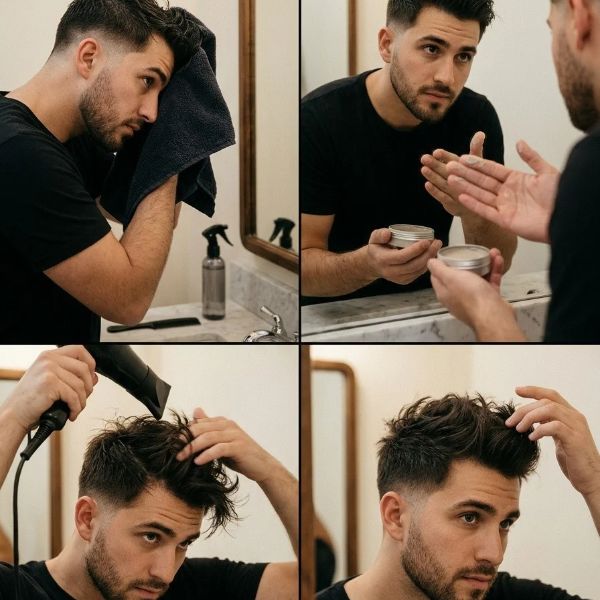
You can style this cut in about five minutes. Follow these steps for a result that lasts all day.
- Start with damp hair. Towel dry until it is no longer dripping. Slightly damp hair is easier to shape.
- Add a pre-styler. A few sprays of sea salt spray (a salty mist that adds grip and a beachy feel) give fine hair extra body.
- Blow dry the top. Use medium heat and your fingers. Push the hair forward or upward, depending on your style.
- Warm a small amount of product. Rub a pea-sized amount of matte clay or paste between your palms until it feels smooth.
- Work it through. Start at the back of the top and move forward. Use your fingertips to pinch and twist small sections.
- Finish with a light hold. A little hairspray keeps the shape in place without making it stiff.
Use matte clay for a dry, natural finish. Use cream for softer looks and curly hair. Avoid heavy gel, since it flattens the texture the haircut is built around.
15 Best Low Taper Fade Textured Top Styles
Each style below shows a different way to wear the same base cut. Pick the one that matches your hair length and daily routine.
Classic Low Taper Fade With Textured Top
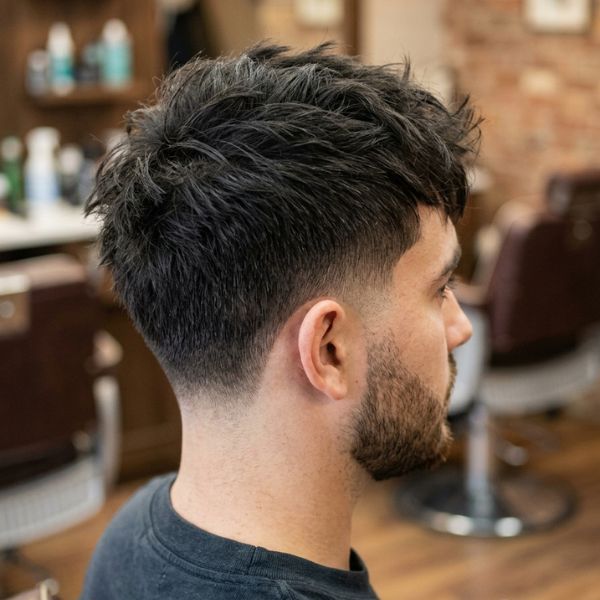
This is the standard version. The sides are tapered neatly, and the top is about 3 inches long with light layers. Style it with a small amount of clay and push it slightly to one side. It fits almost every face shape and work environment.
Messy Low Taper Fade With Textured Top

The messy version uses more layers and less product control. Ask for choppy layers, then tousle the hair with your fingers and a bit of paste. It suits men who want a relaxed, just woke up look that still has clean edges.
Curly Low Taper Fade With Textured Top
This style shows off natural curls while keeping the sides tidy. Leave 3 to 4 inches on top and ask your barber to cut curls dry so they can see how they fall. Use curl cream to reduce frizz and define each coil.
Short Low Taper Fade With Textured Top

If you prefer less hair to manage, keep the top around 1.5 to 2 inches. The layers are shorter, and the style needs only a quick pass of paste. It is a good choice for active men and for hot climates.
Long Low Taper Fade With Textured Top

A longer top of 4 to 6 inches gives you more styling options, from a loose flow to a swept-back finish. The low taper keeps the sides neat so the length does not look untidy. Use a light cream to control frizz.
Low Taper Fade Textured Top Crop
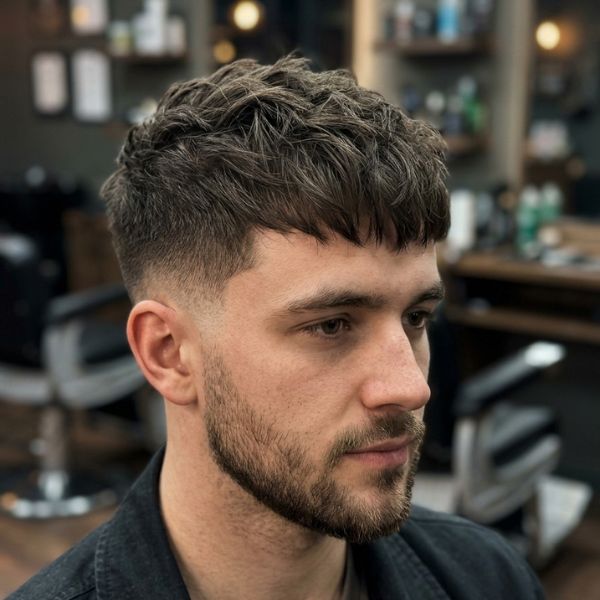
A textured crop is a short, forward-brushed top with a blunt, choppy fringe. It sits high on the forehead and needs very little effort. It also hides a receding hairline well because the hair moves forward.
Low Taper Fade With Spiky Textured Top

This version uses strong-hold clay or wax to lift the top into defined spikes. Keep the spikes short and slightly soft so the look stays modern rather than dated. It works best on straight, thick hair.
Low Taper Fade With Wavy Textured Top
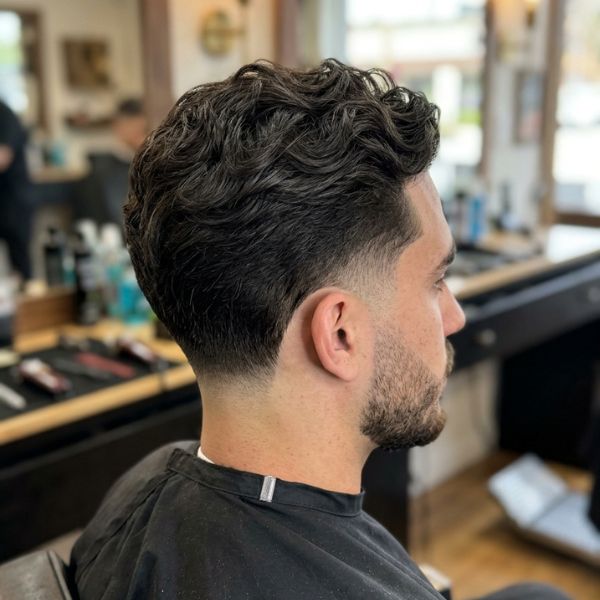
Natural waves create the texture here, so the barber only needs to remove weight and shape the outline. Apply a light cream while hair is damp and let it air dry, or diffuse it on low heat for extra lift.
Low Taper Fade Textured Top With Fringe
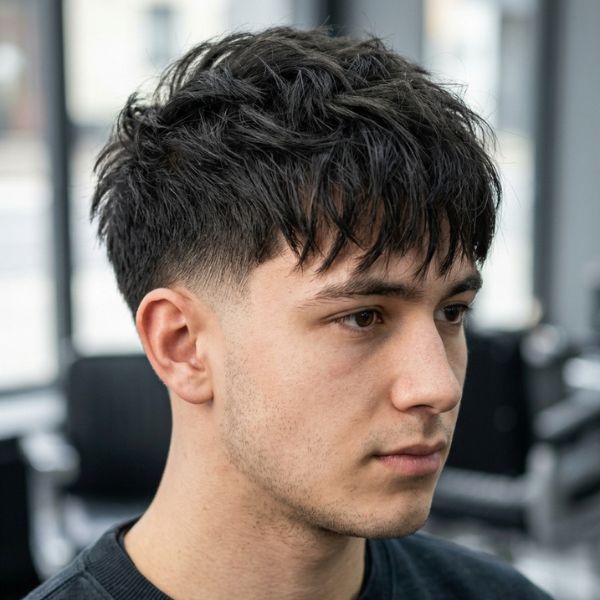
A fringe is the hair that falls over the forehead. In this style, the front is cut choppy and brushed forward, usually reaching the eyebrows. It is one of the most requested variations because it frames the face without looking stiff.
Low Taper Fade Textured Top With Thick
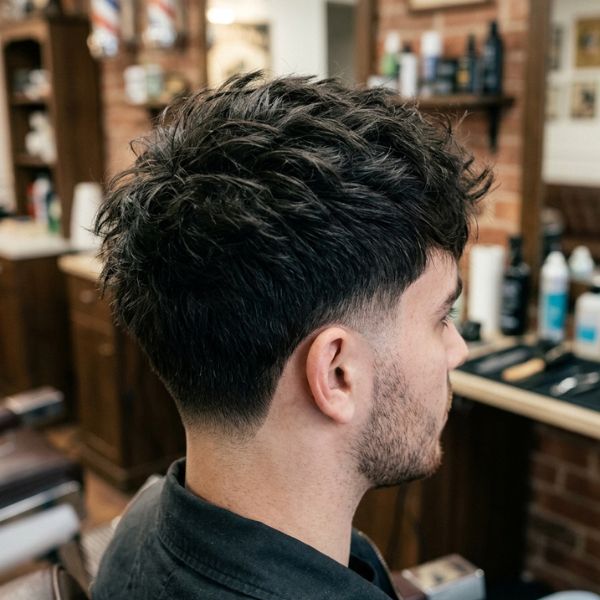
This version is made for thick hair. The barber removes bulk with thinning shears and adds layers so the top has shape instead of just size. Use a strong matte clay to keep the volume controlled throughout the day.
Low Taper Fade With Side-Swept Textured Top
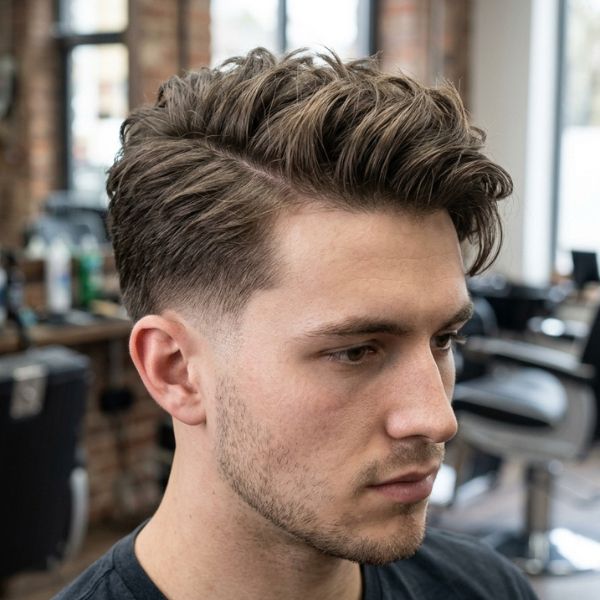
Here the top is combed or pushed to one side, then textured with paste. It looks polished enough for meetings but still has movement. Ask your barber to leave a little extra length on one side so it sweeps naturally.
Low Taper Fade With Tousled Textured Top

Tousled hair looks slightly ruffled and soft. It is less structured than the messy style and works well on wavy hair. Use a sea salt spray, scrunch the hair gently, and let it dry with little shaping.
Low Taper Fade Textured Top With Quiff

A quiff lifts the front of the hair upward and back, creating height at the hairline. Blow dry the front upward with a round brush, then set it with clay. The low taper keeps the sides clean so the height stands out.
Low Taper Fade With Layered Textured Top
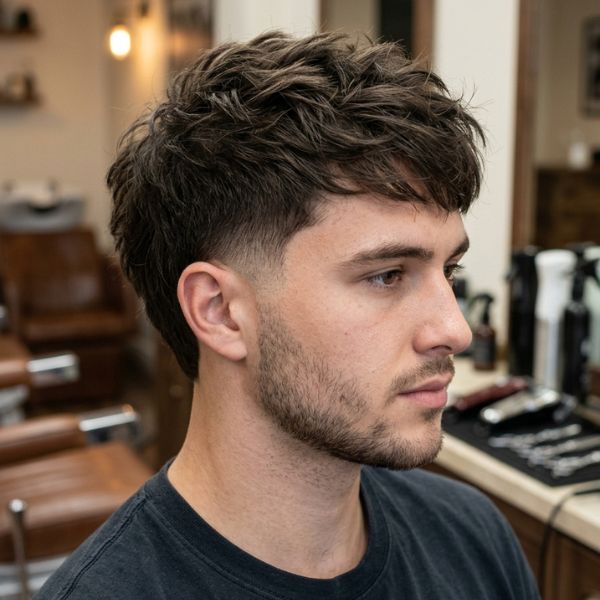
Layers are cut at different lengths to build depth and movement. This is ideal for straight or fine hair, because the layers create fullness that one flat length cannot. Ask for long layers on top and shorter layers toward the sides.
Modern Low Taper Fade With Textured Top
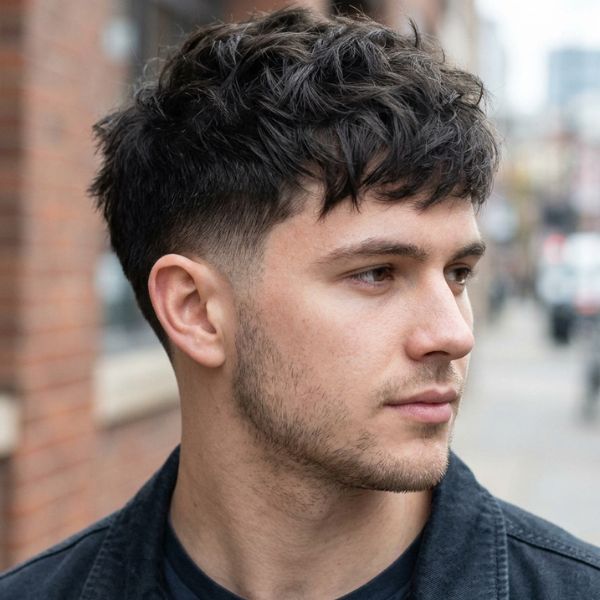
The modern version blends current trends, such as a slightly longer top, soft layers, and a smooth blend into the neckline. Some men add a light line up (a sharp edge along the hairline) for extra definition. It looks fresh without feeling extreme.
Best Hair Types for a Low Taper Fade Textured Top
| Face Shape | Best Version | Why It Works |
| Oval | Almost any style | Balanced proportions suit most lengths |
| Square | Fringe or side-swept top | Softens a strong jawline |
| Round | Quiff or longer top | Adds height and lengthens the face |
| Oblong | Fringe or crop | Reduces the look of length |
| Heart | Side-swept or tousled top | Balances a wider forehead |
How to Style a Low Taper Fade Textured Top
Good styling depends on the right tools as much as the technique. Keep these products in your routine:
- Matte clay: A dry, flexible product that adds hold and a natural look.
- Sea salt spray: A light mist that adds body and grip before you style.
- Hair paste or cream: A softer product for loose, wavy, or curly looks.
- Wide-tooth comb or fingers: Better than a brush for keeping the top messy and natural.
- Hair dryer with a nozzle: Helps direct the hair and set the shape.
Wash your hair two to four times a week rather than daily, since over-washing removes natural oils and can make hair frizzy. Use a clean, light shampoo and a conditioner if your hair is dry or curly. In the evening, rinse out the product so it does not build up.
How to Ask Your Barber for This Haircut

Clear instructions prevent most bad haircuts. Bring a photo and use plain terms like these:
- Name the cut: Say you want a low taper fade with a textured top.
- Describe the sides: Ask for a low taper that starts at the sideburns and neckline, either to skin or with a #1 or #2 guard. A guard is the plastic comb attached to clippers, and the number sets the length: a #1 leaves about 3 millimeters and a #2 about 6 millimeters.
- State the top length: Say how many inches you want, such as 2 to 3 inches, or show it with your fingers.
- Request texture: Ask for point cutting or texturizing shears for a choppy finish.
- Pick the front: Say whether you want a fringe, a quiff, or a side sweep.
- Confirm the neckline: Choose between a natural, rounded, or squared neckline.
A short example script: “I would like a low taper fade starting at the sideburns, a #2 guard at the bottom, 3 inches on top with texture, and a forward fringe.” If you are unsure, ask the barber for advice. A good one will adjust the cut to your hair and face.
How Often Should You Get a Trim?
A low taper stays tidy longer than most fades, but it still needs regular upkeep. Use this schedule as a guide:
- Every 3 to 4 weeks: Full haircut to keep the taper and layers sharp.
- Every 2 weeks: Quick cleanup of the neckline and sideburns, if you like a very crisp edge.
- Every 5 to 6 weeks: Acceptable for a relaxed or longer version, though the shape will soften.
If your hair grows fast or you prefer a skin fade at the bottom, aim for the shorter end of that range. If you wear a longer top, you can stretch the time between cuts.
Final Thought About Low Taper Fade Textured Top
The low taper fade textured top gives you clean edges, flexible styling, and a shape that grows out well. It works on straight, wavy, curly, and thick hair, and it comes in styles from short and neat to long and loose. Choose the version that fits your hair type and face shape, bring a photo to your barber, and use a small amount of matte product each day. Keep up with trims every three to four weeks, and the cut will look fresh all year in 2026.
FAQ About Low Taper Fade Textured Top
What is a low taper fade textured top?
It is a haircut with short, gradually blended sides and a longer, layered top. The layers create movement and volume.
How long should the hair on top be?
Most men keep 2 to 4 inches. Shorter lengths suit a crop, and longer lengths suit a quiff or flow.
Is a low taper the same as a low fade?
No. A taper shortens hair more gently and often leaves some length, while a fade blends down to the skin.
Does it work on curly hair?
Yes. Keep more length on top and use a curl cream to define the curls.
What product is best for a textured top?
Matte clay or paste is best. It adds hold without shine and keeps the texture visible.
How often should I get a trim?
Every 3 to 4 weeks keeps the taper sharp. A neckline cleanup every 2 weeks is optional.
Is this haircut good for thin hair or a receding hairline?
Yes. Short layers add the look of density, and a forward fringe or crop covers a receding hairline.
Can I wear it to work?
Yes. The low taper is the most conservative fade style, so it suits most professional settings.
