

The middle part mullet has moved from niche barbershop request to one of the most searched men’s haircuts of the year. It keeps the rebellious length that made the mullet famous, then pairs it with a clean center part that reads as intentional rather than retro. The result is a cut that works in a boardroom, at a concert, and everywhere in between.
Barbers report that clients are no longer asking for one generic mullet. They want a specific version built around their hair texture, their face shape, and how much time they’re willing to spend on it each morning. This guide breaks the trend into twelve distinct variations, explains who each one suits, and answers the styling and maintenance questions people actually type into Google before booking an appointment.
Top 10 Middle Part Mullet 2026
Barbers agree that this trend has grown well past a single look. Below are the variations shaping men’s and women’s hairstyle trends this year, ranging from soft and shaggy to sharp and faded. Each entry includes who it flatters, how it’s cut, and how to keep it looking fresh between salon visits.
Middle Part Wolf Mullet
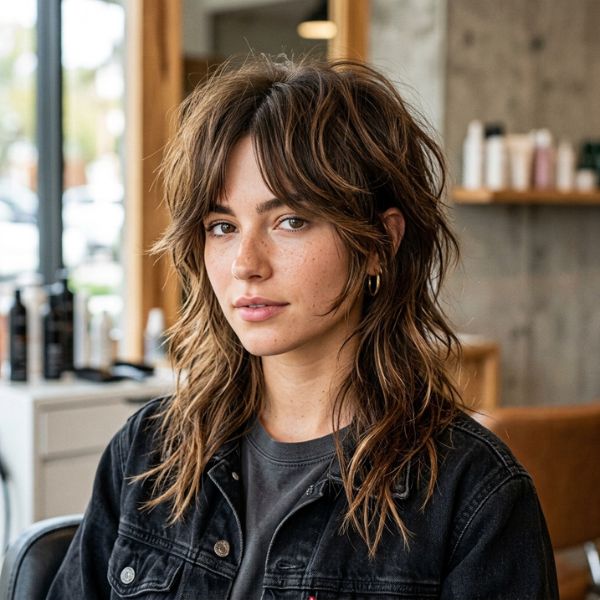
The wolf mullet blends the choppy, voluminous layering of a wolf cut with the classic mullet silhouette, then finishes it with a symmetrical center part. Expect heavy layering through the crown, feathered ends, and a back section that stays long and textured rather than blunt. It suits medium to thick hair that can hold shape without extra product, and it’s a favorite among people who want visible movement without daily styling effort.
Middle Part Straight Mullet
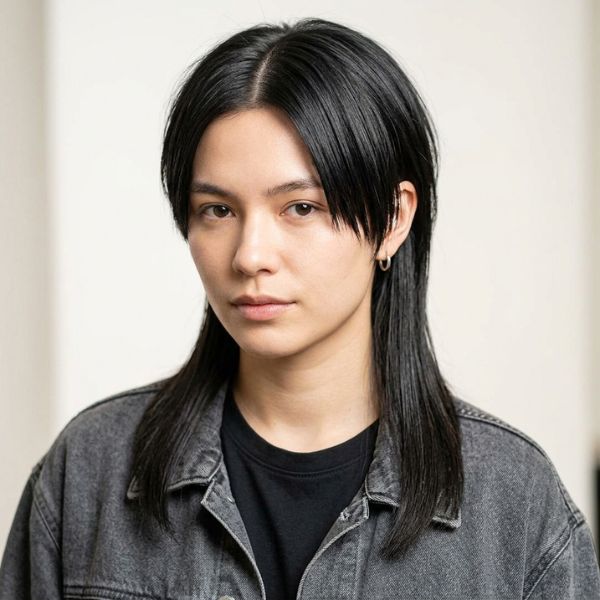
This version relies on sleek, straight strands to show off the clean line of the part itself. Sides stay close to the head, the crown is left with minimal layering, and the back tapers gradually into length. Because straight hair falls naturally into place, this style photographs well and holds its shape through a full workday with almost no touch ups.
Read more: 2 Guard Buzz Cut: How It Looks, Length & Styling Guide (2026)
Middle Part Wavy Mullet
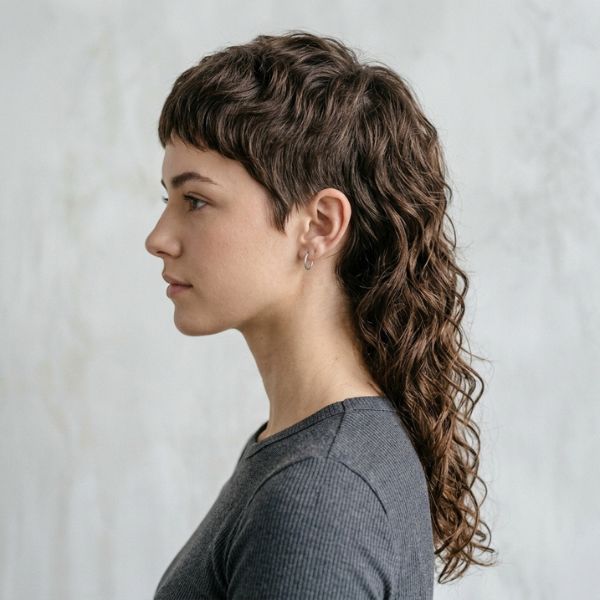
Natural waves add texture and softness to the part without any extra cutting technique. Layers are placed to let the wave pattern show through, especially around the crown and the longer back pieces. A light sea salt spray enhances the bend and keeps the style looking lived in rather than overworked.
Middle Part Korean Mullet
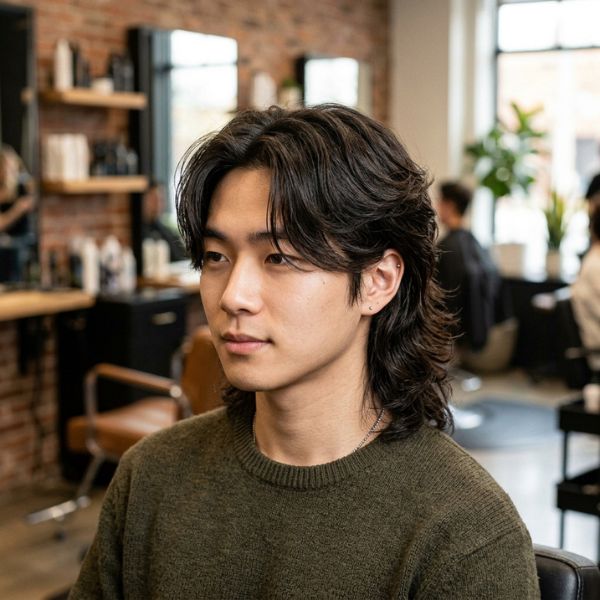
Borrowed from Korean street style, this variation pairs a soft, low center part with face framing layers around the temples and a subtly tapered back. It’s shorter overall than a Western mullet, with more emphasis on the top silhouette than dramatic back length. The look reads polished and youthful, and it’s become one of the most requested references in barbershops that cater to a younger clientele.
Middle Part Mullet Asian
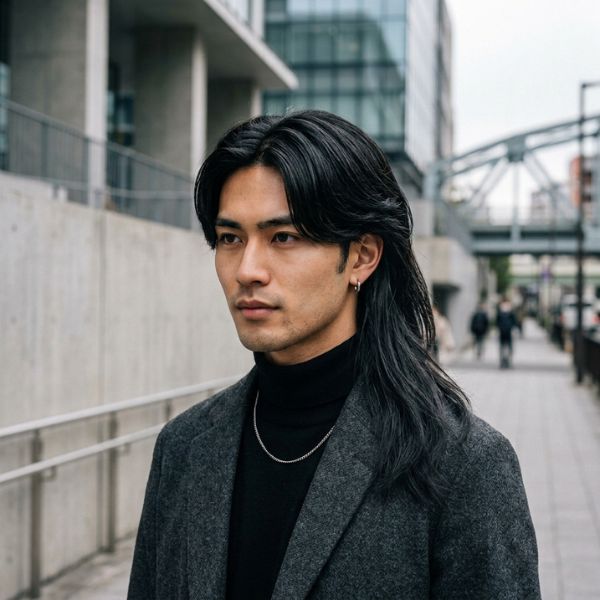
For Asian hair types, which tend to be thicker and more resistant to holding curl, barbers typically add internal layers to reduce bulk and rely on a light styling cream rather than heavy product. This keeps the center part from looking stiff while still holding the shape through humidity and daily wear.
Middle Part Shaggy Mullet

Built on heavy layering and a deliberately undone finish, the shaggy mullet is the lowest maintenance option on this list. Hair is cut to fall naturally in every direction, so a slightly imperfect part actually works in the style’s favor. It’s a strong pick for anyone who prefers air drying over blow drying.
Middle Part Taper Mullet
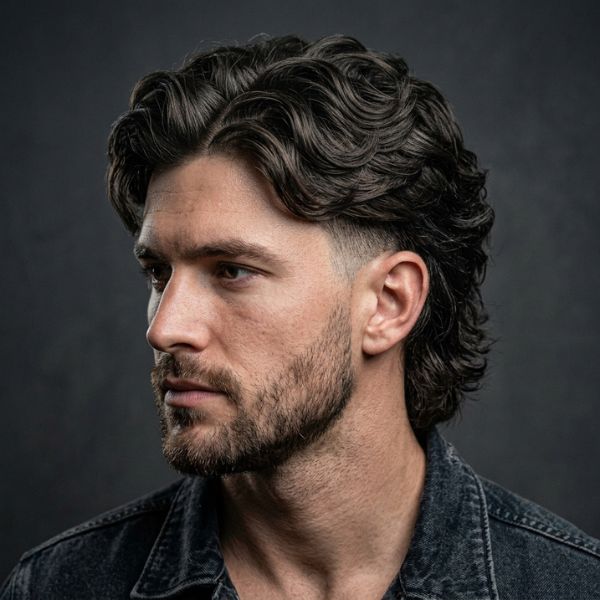
The taper mullet keeps sides gradually shorter without a hard fade line, creating a softer transition than a skin fade. Combined with a center part, it looks tidy enough for office settings while still carrying mullet length at the back. This is often the safest first mullet for someone transitioning from a conventional short haircut.
Middle Part Textured Mullet
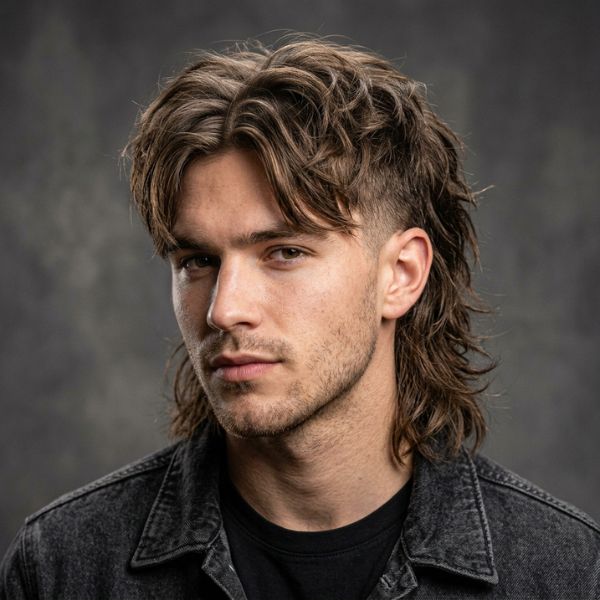
Textured cutting techniques, including point cutting and razor work, add piece-y definition throughout the top and back. The finished look has visible separation between strands rather than one smooth mass of hair. A matte clay or paste is the go-to product here, since it defines texture without adding shine.
Middle Part Curly Mullet
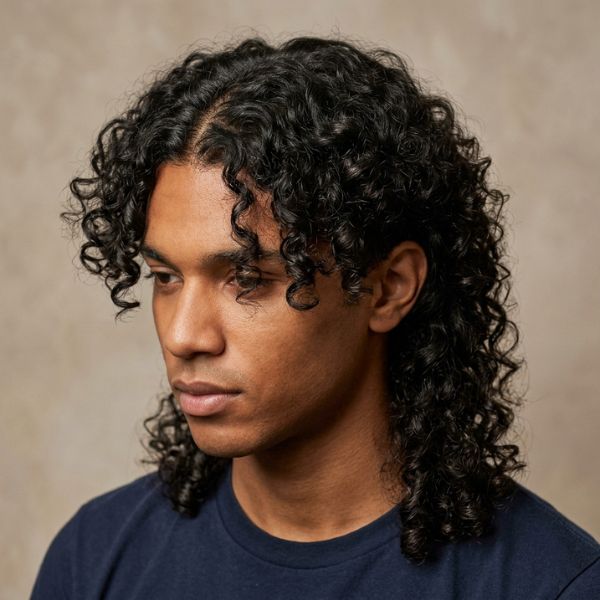
Curly hair naturally supports the volume a mullet needs, and the center part gives otherwise unpredictable curls a defined starting point. Layers are cut with the curl pattern in mind so ringlets or coils fall symmetrically on both sides. A curl cream applied to damp hair, followed by air drying, keeps frizz down while letting the natural texture lead.
Middle Part V Back Mullet
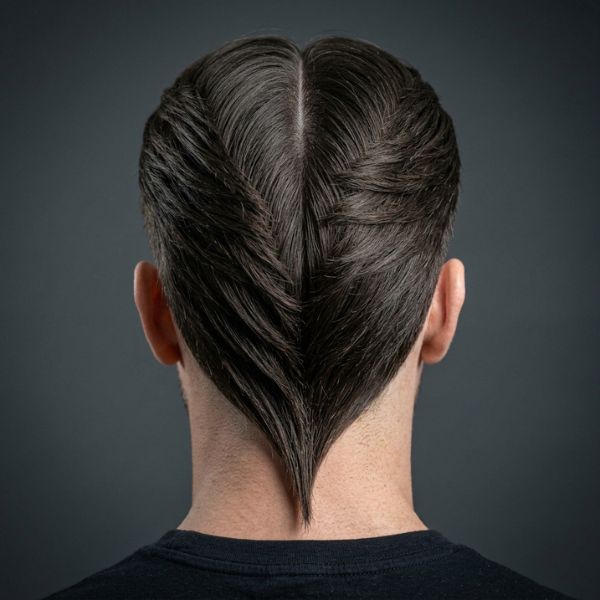
Named for the V shaped point cut into the nape, this variation gives the back section a more sculpted, deliberate finish than a blunt cut. It pairs especially well with straight or lightly wavy hair, where the V shape stays crisp and visible. Barbers usually recommend this for clients who want their mullet to look tailored rather than grown out.
Read more: 32 Modern Mullet Fade Hairstyles for Men in 2026: Trendy Cuts and Styling Ideas
Middle Part Drop Fade Mullet
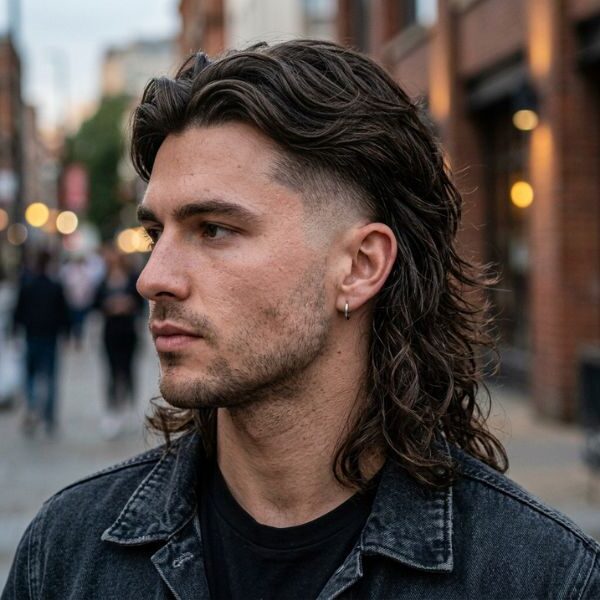
The drop fade curves gently behind the ear, dropping lower than a standard fade before blending into the longer back length. Against the clean line of a center part, this creates strong contrast between short sides and dramatic back hair. It’s one of the boldest options on this list and tends to draw the most attention.
Middle Part Mullet Straight Hair
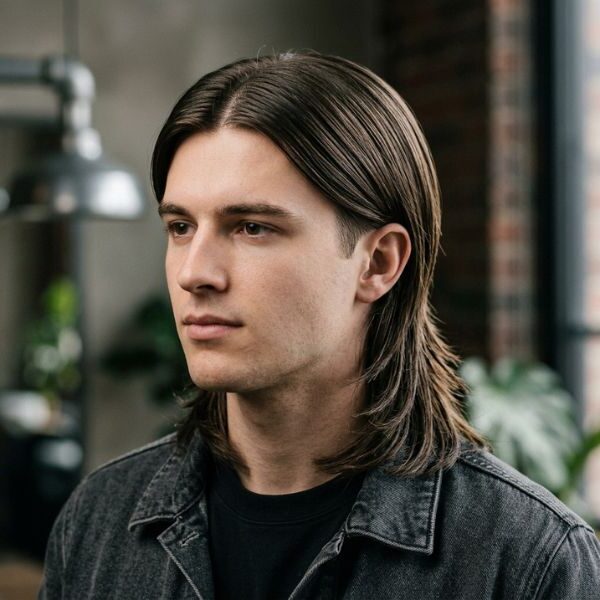
Straight hair holds a drop fade’s clean lines exceptionally well, since there’s no natural wave to soften the contrast between the faded sides and the longer back. Barbers recommend a lightweight pomade for straight strands, applied sparingly, to add shine and control without weighing the top section down.
Styling Middle Part Mullet
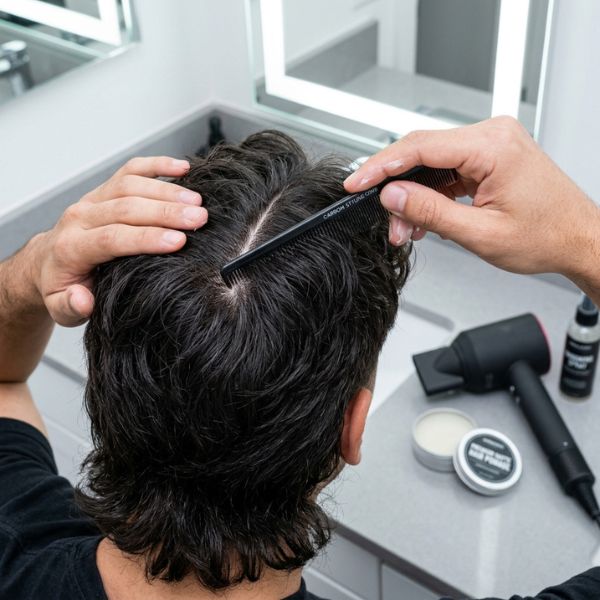
Getting the part right is the foundation of every variation above. A few habits make the difference between a style that looks intentional and one that looks accidental.
- Start with towel dried, not soaking wet, hair. Product distributes more evenly and you can see the part forming as you go.
- Use a fine tooth comb or your fingers to divide hair straight down the center, following the natural crown pattern rather than forcing a perfectly straight line.
- Apply a lightweight cream or light hold mousse to the top section first, then work outward toward the ends.
- Blow dry with a round brush if you want extra volume and shine, or air dry with a diffuser if your hair is wavy or curly.
- Finish the back and sides with a small amount of matte paste to keep the layers separated without stiffness.
Different hair types call for different products. Fine hair benefits from volumizing mousse, thick hair does better with a lightweight cream, and curly hair responds best to a leave in conditioner followed by curl cream.
Easy Care for Middle Part
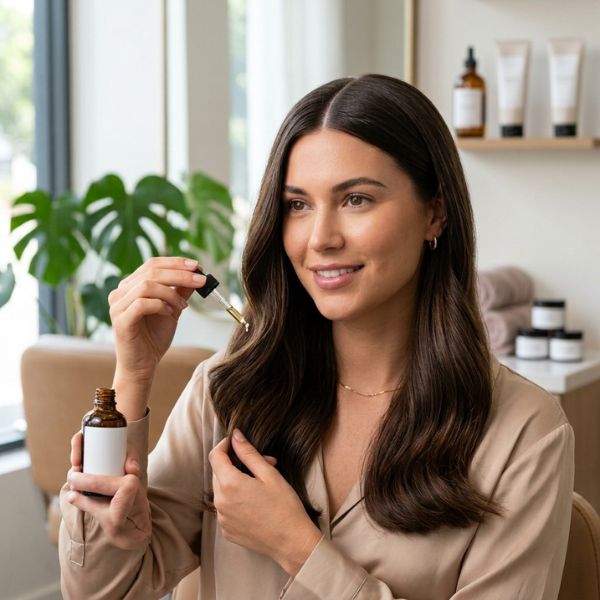
This haircut is more low maintenance than it looks once the initial cut is dialed in. A trim every four to six weeks keeps the shape sharp and prevents the back section from growing out into a shapeless mass. Washing two to three times a week with a lightweight, sulfate free shampoo prevents the crown from looking greasy while still preserving natural oils that help with texture.
A few additional habits extend the life of the cut between salon visits.
- Sleep on a silk or satin pillowcase to reduce frizz and breakage, especially for wavy and curly variations.
- Use a leave in conditioner on the longer back section, since it’s more exposed to heat styling and weather than the top.
- Book a light dusting trim if the ends start to look thin or splitty, rather than waiting for a full cut.
- Avoid brushing curly or wavy versions when dry, since this disrupts the natural pattern and creates frizz.
Trending Middle Part Looks
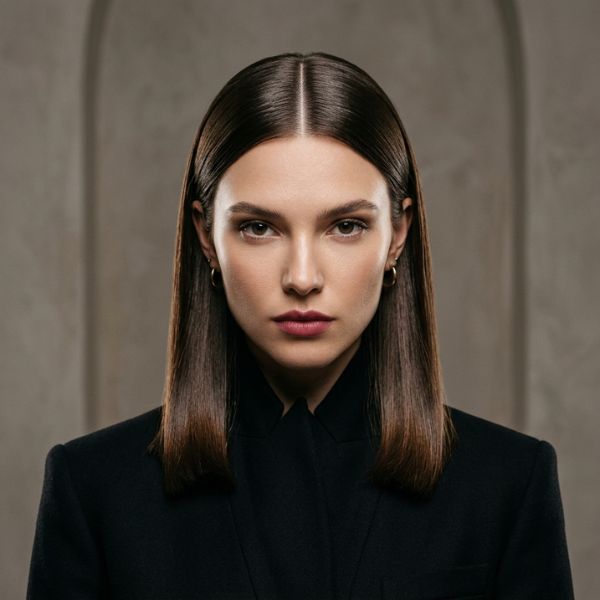
A few pairings are showing up repeatedly on barbershop floors and social feeds this year. Curtain bangs combined with a soft center part have become the default entry point for anyone new to the style, since the face framing effect flatters nearly every face shape. On the bolder end, skin fade sides paired with a dramatic back length are gaining traction among younger clients who want the sharpest possible contrast. Meanwhile, natural texture is being celebrated more than ever, with barbers actively cutting for wave and curl patterns instead of forcing straight lines onto textured hair. Muted, matte finishes are also replacing the high shine looks that dominated a few years ago, giving the whole trend a more lived in, less styled appearance.
Most Suitable Face Shapes for the Middle Part Mullet
| Face Shape | Best Variations | Why It Works |
|---|---|---|
| Oval | Nearly all variations, especially wolf and textured mullets | Balanced proportions mean almost nothing looks out of place |
| Round | Taper mullet, drop fade mullet | Added height and shorter sides create the illusion of length |
| Square | Shaggy mullet, curly mullet | Soft layering eases the angularity of a strong jawline |
| Heart | Korean mullet, curtain style variations | Face framing layers balance a narrower chin |
| Long or Oblong | Wavy mullet, textured mullet | Horizontal layering adds width instead of extra height |
| Diamond | V back mullet, textured mullet | Volume through the crown balances prominent cheekbones |
Frequently Asked Questions
Is the middle part mullet still trending in 2026?
Yes. Barbers report growing demand for customized versions rather than one generic mullet, with the center part now considered a defining feature of modern mullet requests.
Does this haircut work for thin hair?
Yes, with heavier layering near the crown and a lightweight volumizing product to prevent the part from looking flat.
How often should I trim it?
Every four to six weeks keeps the shape defined, though the back section can sometimes go slightly longer between trims.
Can I style it without heat tools?
Yes. Air drying with a light cream or mousse works well for wavy, curly, and shaggy variations, though straight hair versions often look sharper with a quick blow dry.
Is this style appropriate for a professional setting?
Softer versions like the taper mullet or straight mullet read as polished enough for most offices, while drop fade or wolf mullet variations lean more casual.
Conclusion
This center part mullet has earned its place as one of the defining hairstyles of 2026 because it takes a bold, expressive cut and gives it structure. Whether your hair is straight, wavy, curly, or coily, there’s a variation built for your texture and your face shape, from the soft Korean inspired look to the sharp drop fade. Bring a reference photo to your next barber appointment, pick the version that matches your lifestyle and maintenance routine, and let the center part do the rest of the work.
